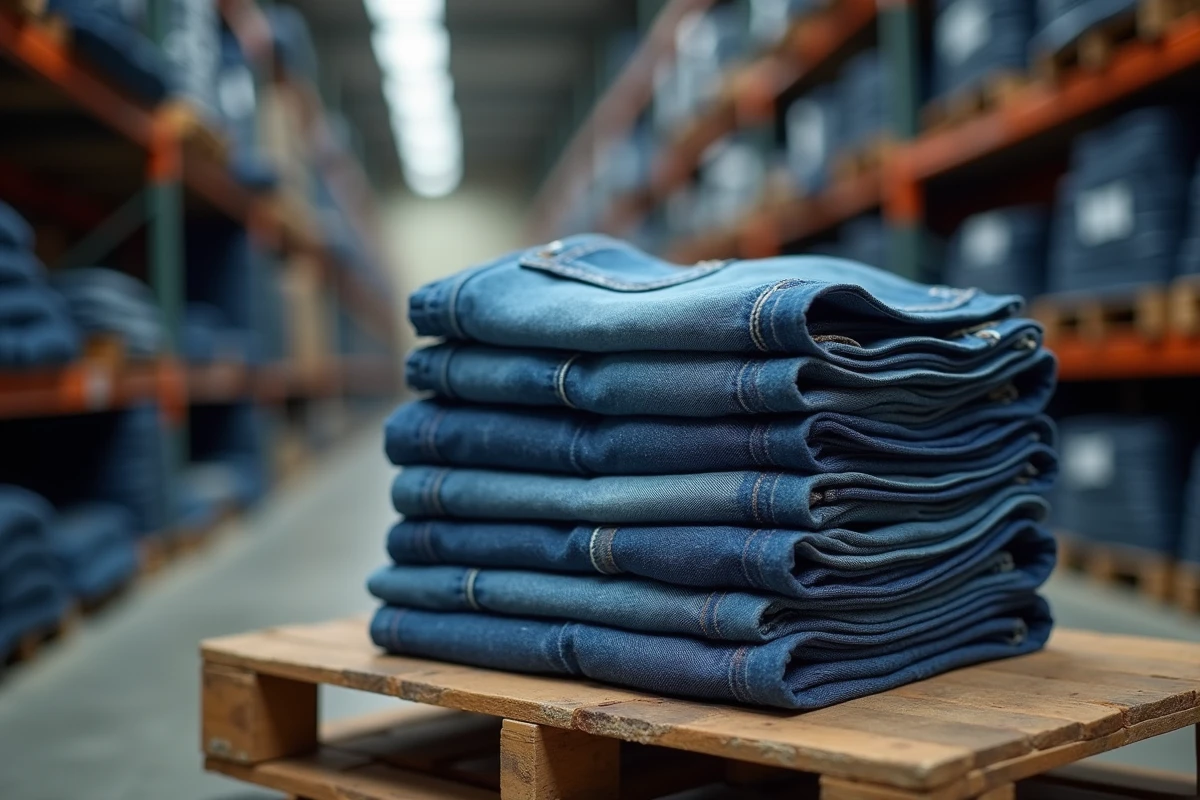
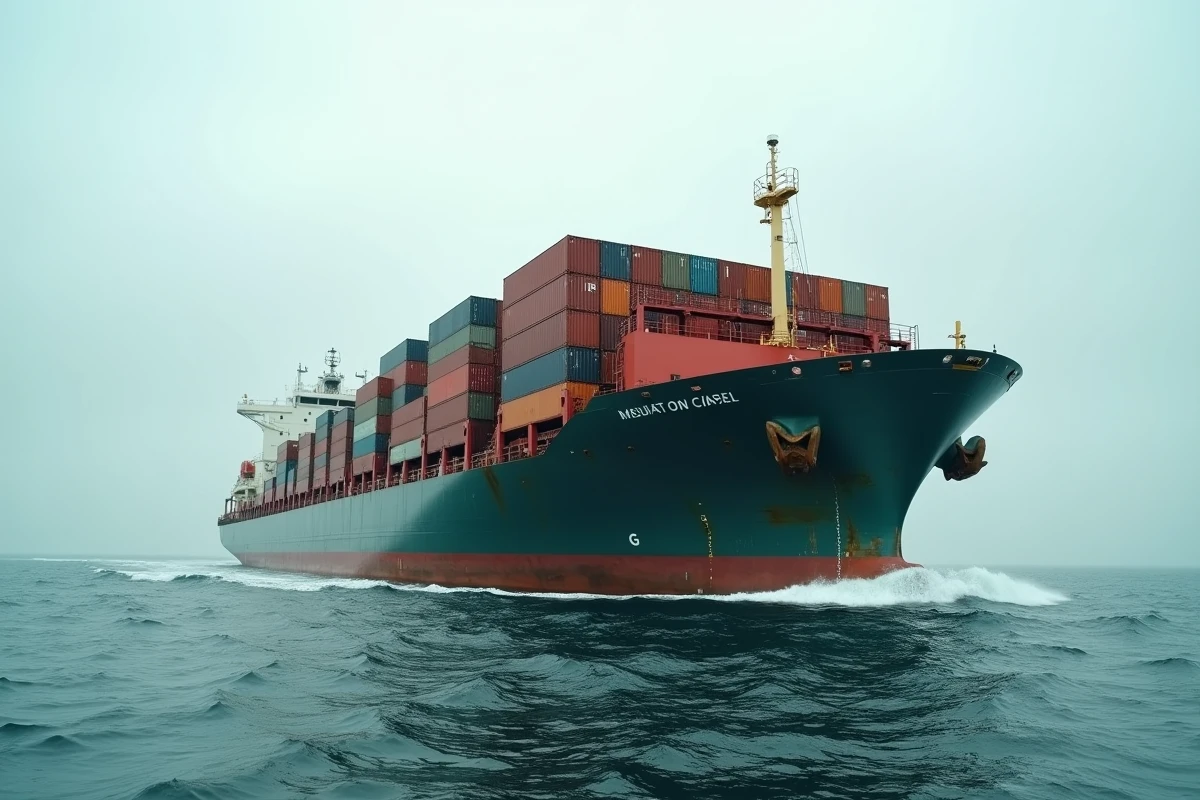
A pair of jeans bought from a French retailer has often traveled across three continents before landing on a hanger. Cotton grows in India or Central Asia, the thread goes to Turkey or China, the fabric is dyed in Morocco, the assembly takes place in Bangladesh, and the finished product returns to Europe by cargo ship.
It is commonly said that 30,000 to 65,000 kilometers are covered by a single pair of jeans, which is between three-quarters and one and a half times around the Earth.
Twenty manufacturing steps spread across several continents
When we detail the supply chain, the number of stops is surprising. Cotton cultivation, ginning, spinning, weaving, dyeing, finishing, cutting, assembly, washing, quality control: each of these operations can take place in a different country.
We better understand, by visualizing the journey of a pair of jeans in numbers, why the cumulative distance reaches these magnitudes. Raw cotton leaves the field in compressed bales, travels by truck to a port, crosses an ocean, and then continues by truck to a spinning mill. And this pattern repeats at each transformation.
Maritime transport represents the longest portion in kilometers, but road freight between each factory adds thousands of additional kilometers that are rarely accounted for. Returns vary on this point, as some estimates only consider the main maritime routes.
Water, chemicals, and CO2: the hidden cost of each kilometer
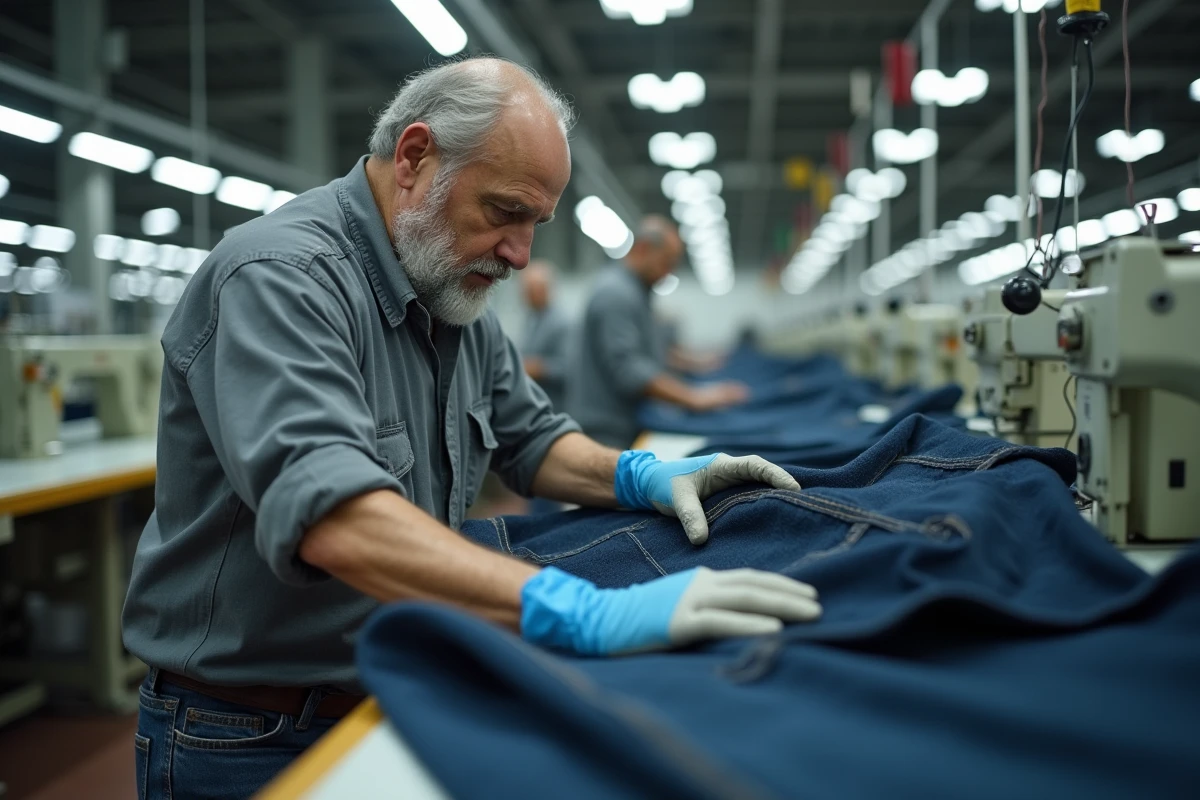
Distance is not just a matter of geography. Each stop adds consumed resources. Cotton cultivation requires massive amounts of water and pesticides. Indigo dyeing uses heavy chemicals, often in countries where wastewater treatment remains rudimentary.
ADEME estimates that a pair of jeans emits an average of 23.2 kg of CO2 over its entire life cycle. This figure includes raw materials, manufacturing, transport, use (repeated washes), and end of life. The transport phase weighs heavily, but it is not solely responsible.
- Intensive cotton cultivation pollutes soils and groundwater with the fertilizers and pesticides used in bulk.
- Dyeing and washing treatments consume successive chemical baths, generating wastewater loaded with heavy metals.
- Domestic washing, throughout the life of the jeans, releases microfibers and consumes water and energy.
It is often underestimated at the time of purchase that the price of a pair of jeans at twenty euros does not reflect any of these externalities. The environmental cost is externalized at each stage of the chain.
Relocalized manufacturing in France: reducing the distance to less than 1,083 km
Some French brands have taken the opposite approach to the outsourced model. The brand 1083, whose name corresponds to the maximum distance between the two farthest cities in France (Menton and Porspoder), produces jeans whose weaving, finishing, cutting, and assembly take place on French soil.
Reducing from 65,000 km to less than 1,083 km radically changes the transport balance. Cotton is often still imported (France hardly cultivates any), but all transformation steps occur within a limited radius.
L’Atelier Tuffery, another player in the French sector, has been testing an enzyme bleaching process for denim since 2025. The goal: to replace some of the chemical treatments and successive washes. These enzymes can be reused in baths, which reduces water consumption and eliminates part of the transport related to the delivery of chemicals.
End of life of jeans: kilometers after the wardrobe
It is often forgotten that the journey does not stop when the jeans are put away in the closet. The French throw away hundreds of thousands of tons of clothing each year. Some of it is collected for reuse or recycling, but sorting channels are currently saturated.
This saturation causes a cascading effect: unsorted or non-recyclable clothing is sent back to export channels, often to Africa or Asia, adding even more thousands of kilometers to the tally. In some cases, they simply end up incinerated or buried.
- A pair of jeans given to a textile collection can be sent to a sorting center in Eastern Europe before being resold on an African market.
- Fast fashion jeans, made with blended fibers (cotton-elastane), are particularly difficult to recycle, increasing their likelihood of export or destruction.
- Repairing remains the most direct lever to cut these additional kilometers short: mending a pair of jeans extends its lifespan without any intercontinental transport.
Fewer kilometers, more sustainability: what we can do concretely
Buying jeans made in France or Europe dramatically reduces the distance traveled, but it is not the only lever. A pair of jeans worn longer divides its impact by year of use. Washing less often, at low temperatures, also limits the “use” portion of the carbon footprint.
Choosing denim made from organic or recycled cotton reduces the footprint related to cultivation, even if the fabric has traveled. Combining short supply chains and responsible materials remains the configuration that is least resource-intensive.
The next pair of jeans you put on may have traveled the world, or only crossed a few French regions. The difference between the two scenarios is measured in tens of thousands of kilometers, thousands of liters of water, and kilos of CO2. The choice is made at the time of purchase, not after.