A couple booking their reception venue in 2026 faces providers offering packages spread over two or three days. The wedding is no longer limited to a single day: next-day brunch, pre-wedding photo session, garden party a few weeks after the ceremony. This global experience logic redefines how weddings are organized, budgeted, and experienced this year.
Multi-event weddings: the ceremony spread over several days
We are seeing an increase in “multi-time” packages on the ground. The civil ceremony takes place on a Friday with a small group, the main celebration on Saturday, and a relaxed brunch on Sunday morning. Providers (caterers, photographers, DJs) are adapting their offerings with packages covering two to three days.
The concrete benefit for couples: spreading the mental load and budget over several distinct moments. We no longer compress speeches, the cocktail reception, dinner, and dancing into twelve hours. Each highlight has its own rhythm, which relieves organizational pressure.
This wedding trend driven by Generation Z also prompts a rethink of the guest list. Some close friends only come on Sunday, others only to the Saturday party. You can find wedding news from Les Mariés de Sylvie that regularly detail these new configurations adopted by future brides and grooms.
Embracing micro-weddings: fewer guests, more quality
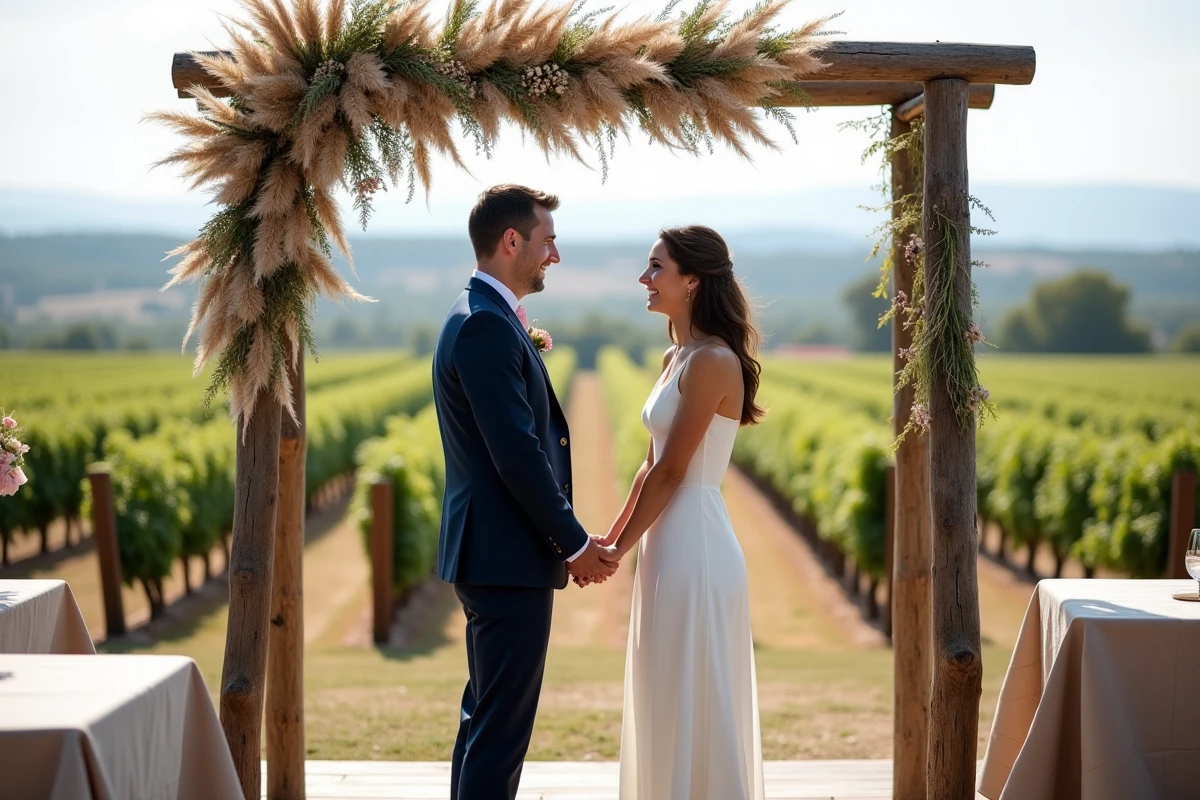
The micro-wedding is no longer a budget-driven Plan B. Couples who choose to limit the guest list to a very small circle do so for a specific reason: to spend real time with each guest. We’re talking about twenty to forty guests, sometimes fewer.
In practical terms, this changes everything in the organization. A venue meant for three hundred people makes no sense. Couples are turning to atypical locations (private estates, exclusive fine dining restaurants, countryside cottages) that would be too small for a traditional wedding.
What this changes in the budget
Fewer guests does not mean lower total spending. Couples are reinvesting the “volume” budget into quality: gourmet menus, open bars with artisanal cocktails, photographers present throughout the event. Feedback varies on this point, but several providers note that the budget per guest significantly increases in these smaller formats.
Wedding decoration trends: bold colors and textile draping
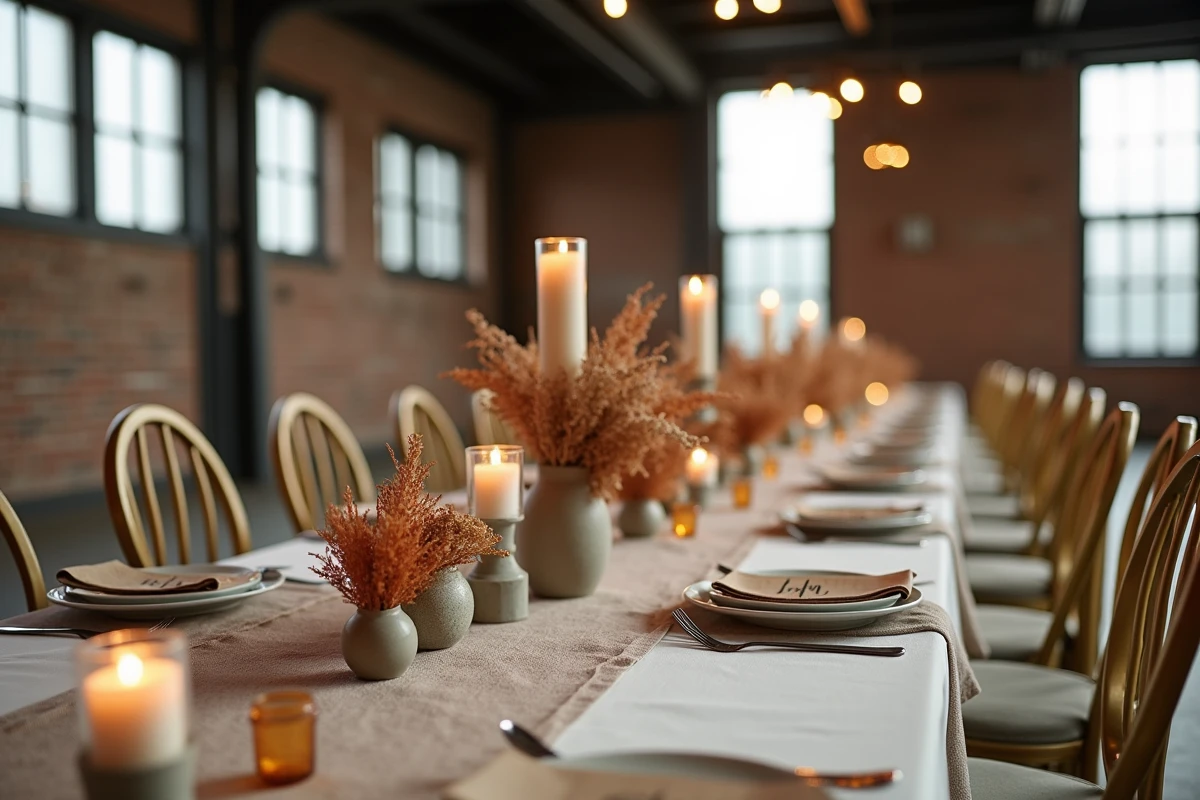
Pastel palettes are declining. The couples of 2026 are embracing bolder colors and strong contrasts: deep burgundy, terracotta, forest green, sometimes with black as a decorative touch. Textile draping replaces overloaded floral arches, featuring suspended drapes, raw linen tablecloths, and silk ribbons tied to chairs.
In terms of flowers, the trend is towards structured “less is more.” A single flower variety in large quantities (the “one big flower” concept) creates a clearer visual effect than a mix of ten different species. Floral arrangements are becoming sculptural, almost architectural.
- Natural fabric draping (linen, cotton, washed silk) to dress ceilings and structures
- Streamlined palette of two or three bold colors, no pastels
- Vintage mirrors used as decorative and directional elements
- Single flower massed on table centerpieces
Guest experience: the true measure of a wedding’s success in 2026
The majority of couples now believe that the success of their wedding is measured by the feelings of their loved ones. It’s not just about good music and a plentiful buffet. We’re talking about hospitality thought out in detail.
Immersive entertainment and non-alcoholic options
Mobile bars are gaining ground: cocktails prepared in front of guests, a cart with artisanal ice creams, a coffee-pastry station at the end of the evening. Non-alcoholic options are no longer a discreet line at the bottom of the menu. Elaborate mocktails are featured at the same level as classic cocktails, with the same presentation and care.
Another trend taking hold is the “unplugged” ceremony, without phones. Guests leave their smartphones at the entrance (or commit not to film). The professional photographer is the only one capturing the moment. Couples who have tried this format report a significantly different level of attention and emotion during the ceremony.
Reimagined gifts and wedding registries
The traditional in-store wedding registry is giving way to online funds and open registries. Couples are offering experiences (a night in accommodation, cooking classes, sports activities) rather than dinnerware. Some opt for a hybrid registry: a few selected items and a travel fund.
Bridal gowns and attire: changing silhouettes
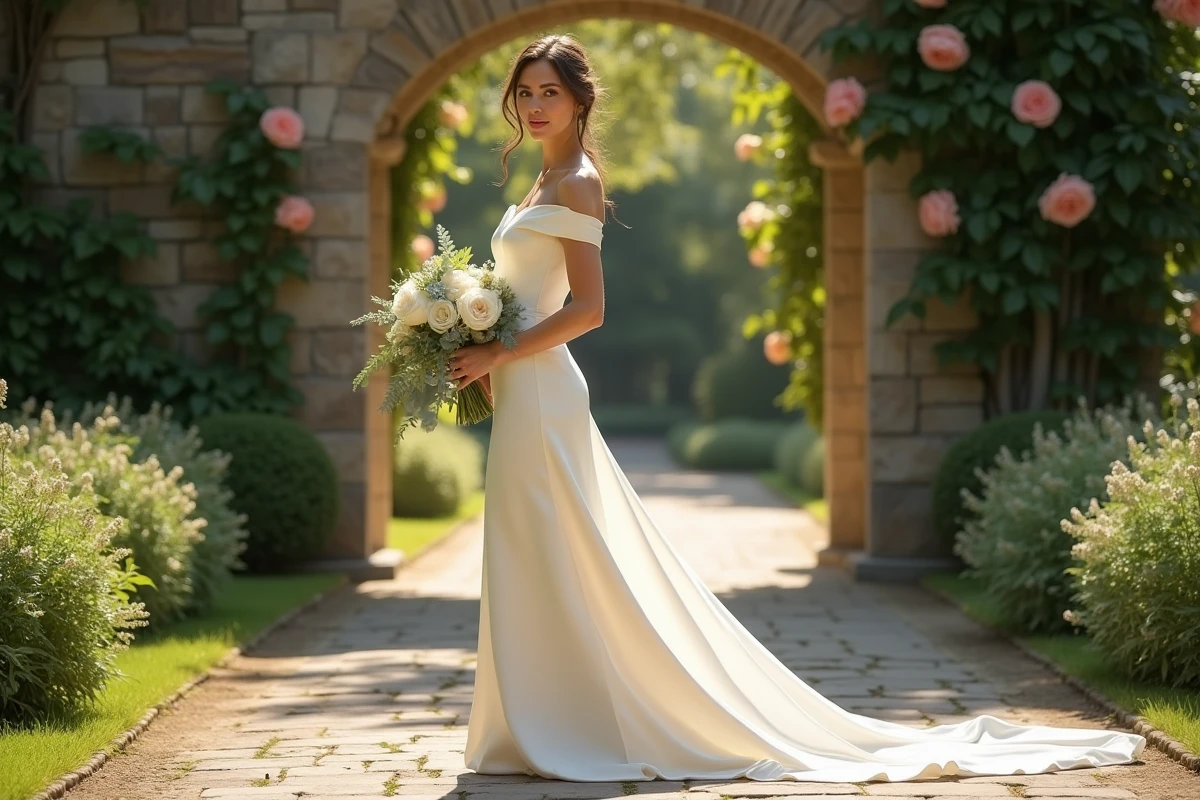
Bridal gowns are following the general movement towards personal expression. Bold silhouettes are replacing princess tulle: straight cuts, trousers, jumpsuits, structured sleeves. White remains dominant, but touches of color (contrasting belts, gold embroidery, tinted veils) are becoming commonplace.
The second-hand wedding dress market is also growing, driven by both ecological and budgetary logic. Specialized resale platforms are multiplying, and custom alterations allow for adapting a vintage dress to one’s body shape.
The groom’s suit follows the same dynamic. Classic shades (navy blue, charcoal gray) coexist with bolder choices: sage-colored suits, unlined linen jackets for summer weddings, bow ties replaced by scarves.
The wedding trends of 2026 converge towards a common thread: personalization takes precedence over conventions. Couples organizing their day this year have access to formats and styles that did not exist five years ago. The only constraint that matters is the venue, not the conventions.