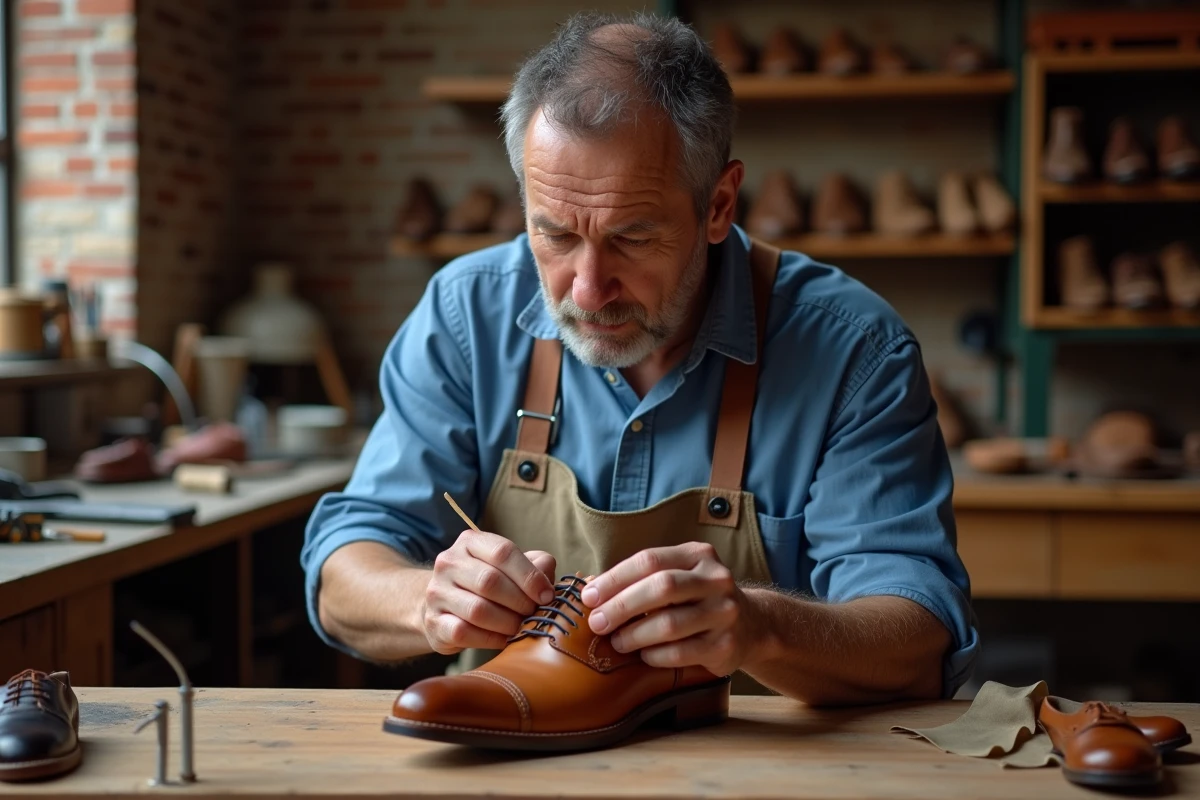
No one bets on outsiders, except when they refuse to disappear. In Belgium, small shoe manufacturers persist despite the dominance of fast fashion giants. Local labels, often unknown outside the country, maintain inherited manufacturing techniques and invest in ethical materials, going against global trends.
Belgium, a unique breeding ground for authentic shoe creation
Behind its discretion, Belgium cultivates a fashion tradition unlike any other. This country relies on a network of prestigious schools and platforms that support creation. The Royal Academy of Fine Arts in Antwerp and La Cambre in Brussels train creators each year who accept no compromises: neither on quality nor on originality. These institutions, true incubators of talent, nourish an entire sector and forge a reputation for excellence that Belgian designers benefit from well beyond their borders.
This local fabric rests on a solid ecosystem of support and enhancement, which encourages innovation and the search for responsible materials. MAD, Flanders DC, and Wallonie-Bruxelles Design Mode provide startups with a framework to express themselves and export, while defending a coherent vision of quality-price ratio, far removed from the standards of mass production. Here, Belgium asserts itself through its ability to adopt ethical and responsible practices in a universe where standardization reigns supreme.
One cannot ignore the impact of Belgian shoes and their manufacturing in the history of European design. This position is based on an unwavering demand for traceability and transparency. Belgium thus establishes itself as a laboratory of ideas, on par with Portugal or Italy, capable of competing with the giants of the sector. Thanks to this network of committed players, Belgian creation delivers products with high added value, marked by a particular attention to materials and the uniqueness of each manufacturing step.
Which Belgian creators and brands are shaping international fashion today?
The Belgian scene is bursting with an energy that is eager to express itself. Here, designers combine creativity with stringent demands on materials and manufacturing. The Six from Antwerp, Dirk Bikkembergs, Ann Demeulemeester, Walter van Beirendonck, Dries Van Noten, Dirk Van Saene, and Marine Lee have paved the way for a whole generation that sees shoes as a field of exploration in its own right.
Martin Margiela, a pioneer of deconstruction, has disrupted the rules of luxury and still inspires a wide circle of Belgian creators today. Nowadays, innovation can be found in brands like NORM, which offers sneakers made from recycled European materials, or BALAO, known for its upcycled shoes. BALAO focuses on Apple Skin, corn starch, or rubber made from recycled plastic bottles, never compromising on style or quality of construction.
Other brands stand out by taking a stand for sustainable and transparent fashion. Kunoka, FAM The Label, and Komrads reinvent the link between style, responsibility, and traceability. These houses prioritize short circuits, the use of recycled fibers, and small-batch production.
Here are some markers to better grasp this dynamism:
- NORM: recyclable sneakers, commitment to reforestation (two trees planted for every pair sold), international distribution
- BALAO: upcycled shoes, use of innovative materials, controlled production
- Kunoka: priority on sustainability, strong aesthetic, European manufacturing
Belgian fashion thus establishes itself at the heart of Europe as a driver of innovation, both in materials and quality, and continues to cultivate a unique identity that appeals well beyond its borders.
In the face of fast fashion: challenges, alternatives, and the commitment of Belgian artisans
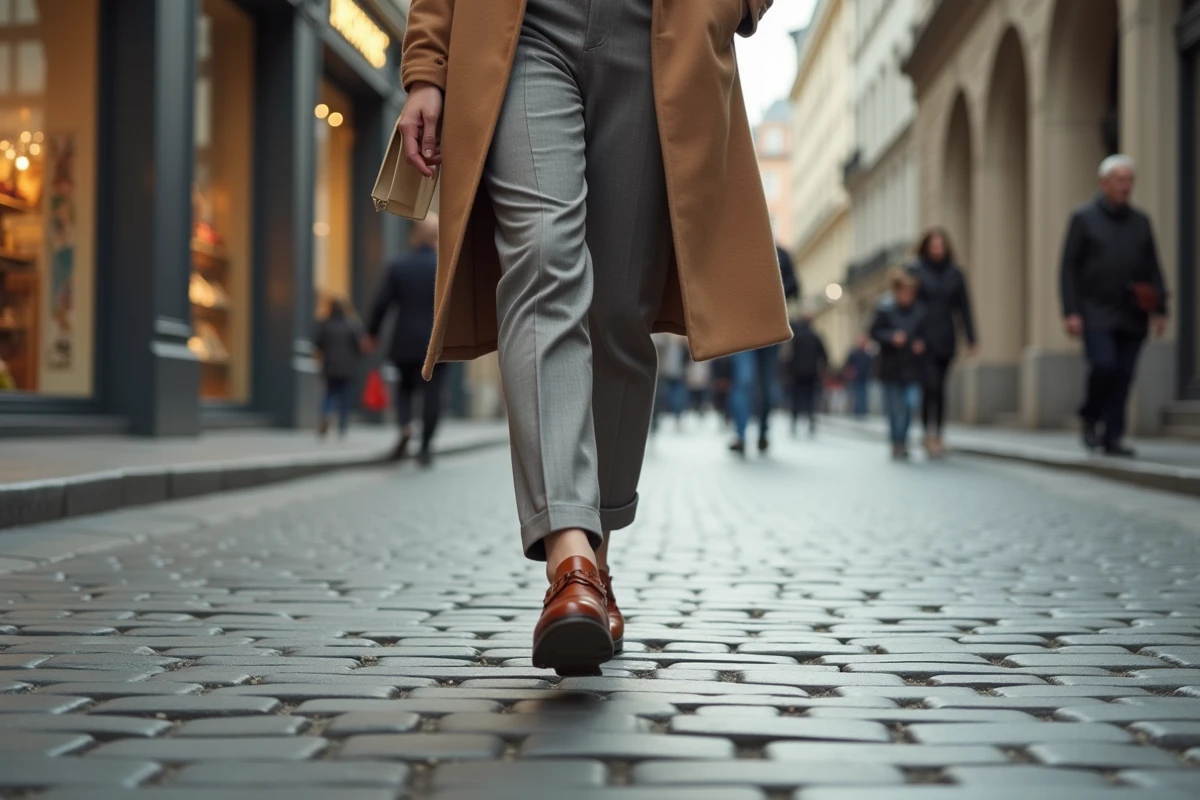
At a time when fast fashion invades shelves and minds, Belgian artisans are charting a separate path. Their response: to bet on quality, the inventiveness of materials, and respect for labor, as an act of resistance against the logic of volume and discounts at all costs. In the global market, Asia dominates over 60% of production, with China leading the way, in the name of speed and margins. But in Belgium, responsible fashion and traceability take precedence over uniformity.
Belgian consumers, increasingly concerned about ecology and ethics, want a different relationship with shoes. Several initiatives testify to this shift: collection of used shoes for recycling, recycled materials (plastic bottles, rubber, Apple Skin), rejection of vegan leather made from petrochemical synthetic fibers. Strong partnerships are emerging, such as that of NORM and Graine de Vie, which commit to offsetting carbon footprints by planting two trees for every pair sold.
The Belgian sector is making a bet: a reasoned, European production, and enhanced transparency regarding manufacturing conditions. Prioritizing Portugal or Spain for production, rather than Asia, is about maintaining control over quality and proximity. Belgian artisans focus on sustainability, material innovation, and finding a real balance between style, conscience, and efficiency. In the face of standardization, Belgian shoes are forging their own path, proving that another model is possible—more demanding, more human, and, above all, more faithful to those who wear them.