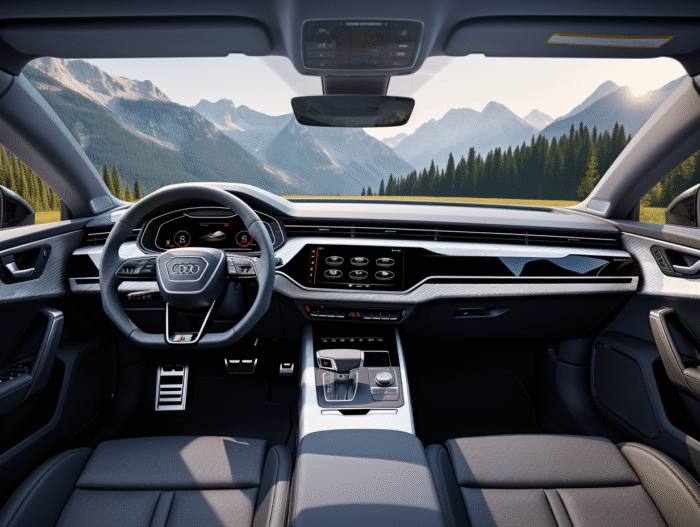
In the era of automotive digitization, touchscreens have become a central interface for controlling various functions in modern vehicles. Their integration is not without challenges. Drivers face issues such as inconsistent touch sensitivity, response delays, complex menus, reduced visibility due to glare, and sometimes complete system failures. These problems can not only harm the driving experience but also pose safety risks by distracting the driver’s attention. Solutions are being sought to improve the reliability and intuitiveness of these essential systems.
Diagnosis of Touchscreen Malfunctions in Modern Vehicles
The technology of touchscreens has established itself in the cabins of modern vehicles, blurring the lines between automotive and digital. These systems are not immune to failures. Cases like the Peugeot 208 touchscreen not working raise questions about the quality and reliability of these interfaces. Users, these everyday drivers, find themselves facing stubborn LCD screens, where touch accuracy, essential for road safety, is compromised. The causes, sometimes complex, range from electromagnetic interference to design flaws and premature aging of components.
Manufacturers, such as Tesla with its Model 3, have rethought the use of the touchscreen, even integrating the control of the wiper, which was previously accessible via a steering column lever. This has sparked debates about ergonomics and functional overkill, which can affect driver attention; vehicles like the Volkswagen ID3 have been criticized for the poor usability of their basic functions through the touchscreen, revealing a user-centered design issue.
To address these malfunctions, a deep understanding of the underlying causes is necessary. Electromagnetic interference, for example, can disrupt the performance of screens, leading to failures. The shift to electric cars amplifies these challenges, requiring innovative solutions to mitigate these disturbances and promote a safe and intuitive user experience. The judicious integration of physical buttons for critical functions could provide a partial response to the issues posed by reliance on touchscreens.

Strategies and Innovations to Improve the Reliability of Automotive Touchscreens
In the quest for solutions to address touchscreen failures, the automotive industry is turning to advanced display technologies. These innovations aim to enhance the reliability of these essential components. Notable progress is being observed in the application of communication standards such as LVDS and MIPI DSI, which allow for high-speed data transmission with low power consumption, reducing the risks of electromagnetic interference.
Manufacturers like Tesla and Volkswagen are also investing in the development of EVE smart displays (Embedded Video Engine), which, through their optimized architectures, mitigate interference and improve human-machine interaction. These interfaces, by reducing latency and offering better touch responsiveness, aim to decrease driver distraction and enhance road safety.
In this technological ecosystem, Saab’s approach deserves attention. The brand, known for its safety-focused design philosophy, has previously innovated by integrating dual bulbs in its lighting systems to ensure functional redundancy. An analogy can be drawn for touchscreens, where the implementation of backup or redundancy systems could ensure service continuity and increased safety.
Human Horizons, an electric vehicle manufacturer, has introduced its Prototype EV, scheduled for a series in 2021, illustrating a new generation of human-machine interfaces. These interfaces incorporate third-party development tools, allowing for increased customization and deeper integration of third-party applications, while adhering to strict homologation criteria, similar to Euro NCAP standards. These advancements illustrate a trend towards greater modularity and adaptability of embedded systems, paving the way for tailored solutions to emerging issues with automotive touchscreens.