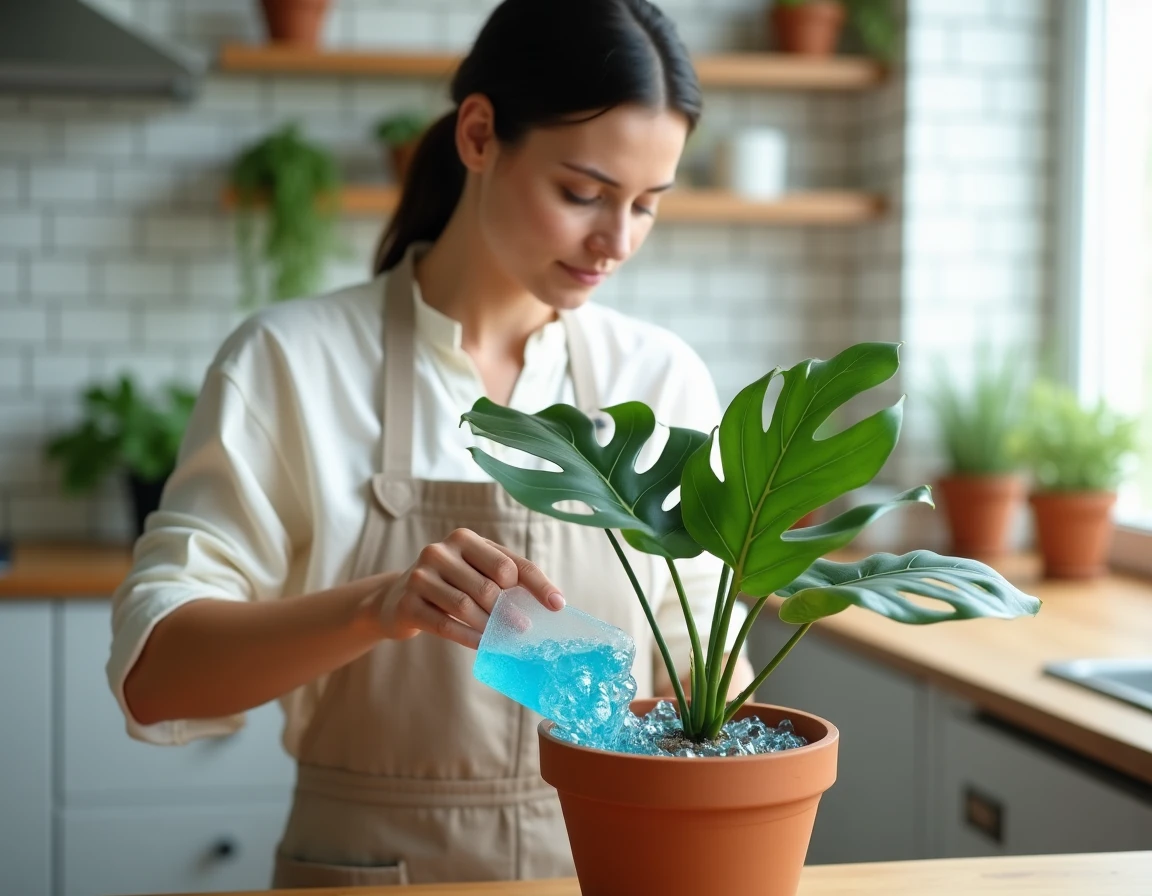
Water beads for plants are polymers capable of absorbing several hundred times their weight in water. Their promise: to regulate the moisture of the substrate and space out watering. However, not all beads are created equal, and their effectiveness depends on the type of plant, the substrate, and how they are integrated into the pot. Measuring what actually changes in daily water management requires comparing these beads to other moisture retention methods.
Horticultural hydrogel and decorative beads: two products that are completely different
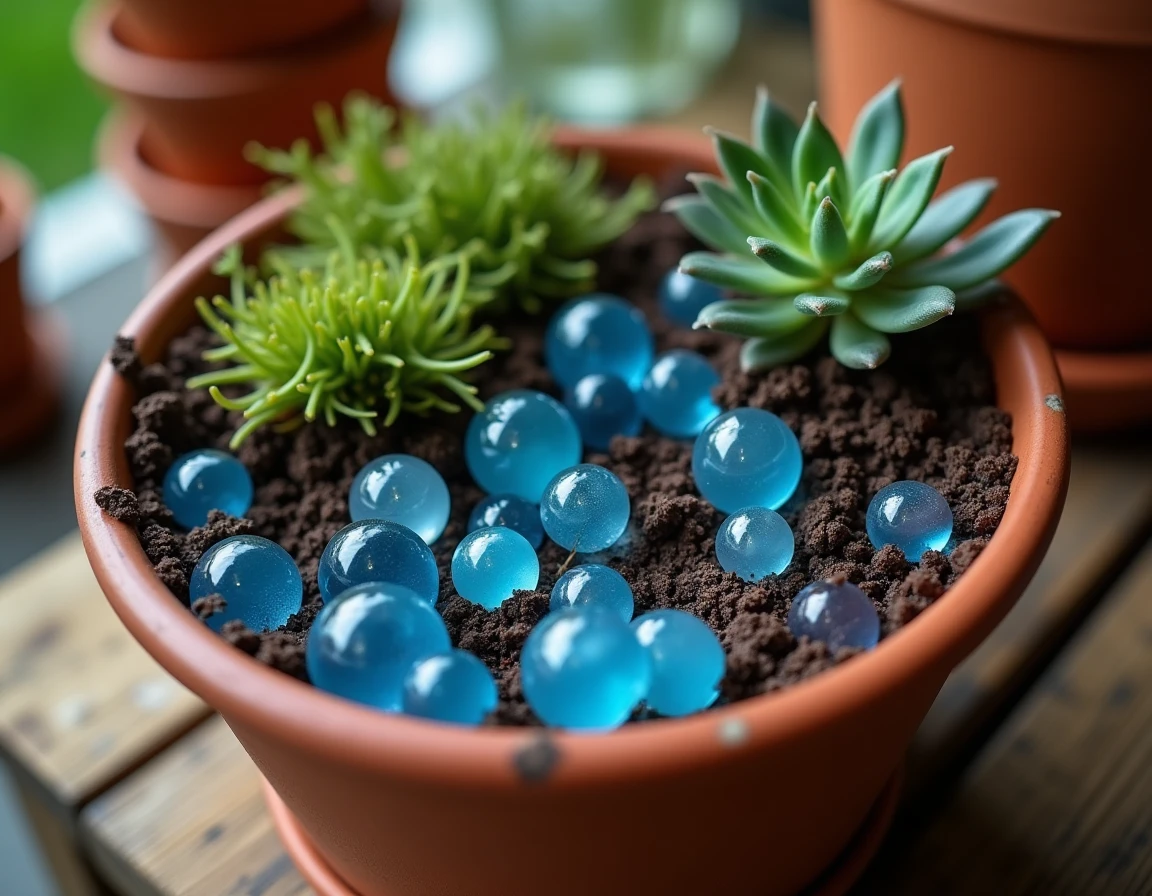
The first trap is to confuse the colored beads sold in the decoration aisle (like Orbeez) with professional hydrogels made from cross-linked polyacrylamide. Technical publications in horticulture since the 2010s clearly distinguish between these two families.
Decorative beads are designed for temporary visual use. Their stability in a substrate is low: they fragment faster, release dyes upon prolonged contact with potting soil, and do not guarantee a regular release of water to the roots.
Horticultural hydrogels, on the other hand, are formulated to be mixed directly into the soil. Their chemical structure allows them to swell, release water gradually, and then re-swell at the next watering over several cycles. Technical data sheets from manufacturers updated after 2020 explicitly discourage the use of decorative beads as a substitute for hydrogels designed for cultivation.
| Criterion | Decorative beads (like Orbeez) | Horticultural hydrogel (cross-linked polyacrylamide) |
|---|---|---|
| Intended use | Decoration, play | Mixing into the growing substrate |
| Durability in potting soil | Rapid fragmentation | Several swelling cycles |
| Dye release | Frequent | Absent or negligible |
| Water release | Irregular | Gradual and controlled |
| Compatibility with indoor plants | Limited | Suitable (Calathea, ferns, Fittonia) |
Before choosing, it is essential to know precisely which product you are handling. Using water beads for plants with the right type of hydrogel radically changes the outcome compared to recycled decorative beads in a ficus pot.
Water beads mixed with substrate: what user feedback really shows
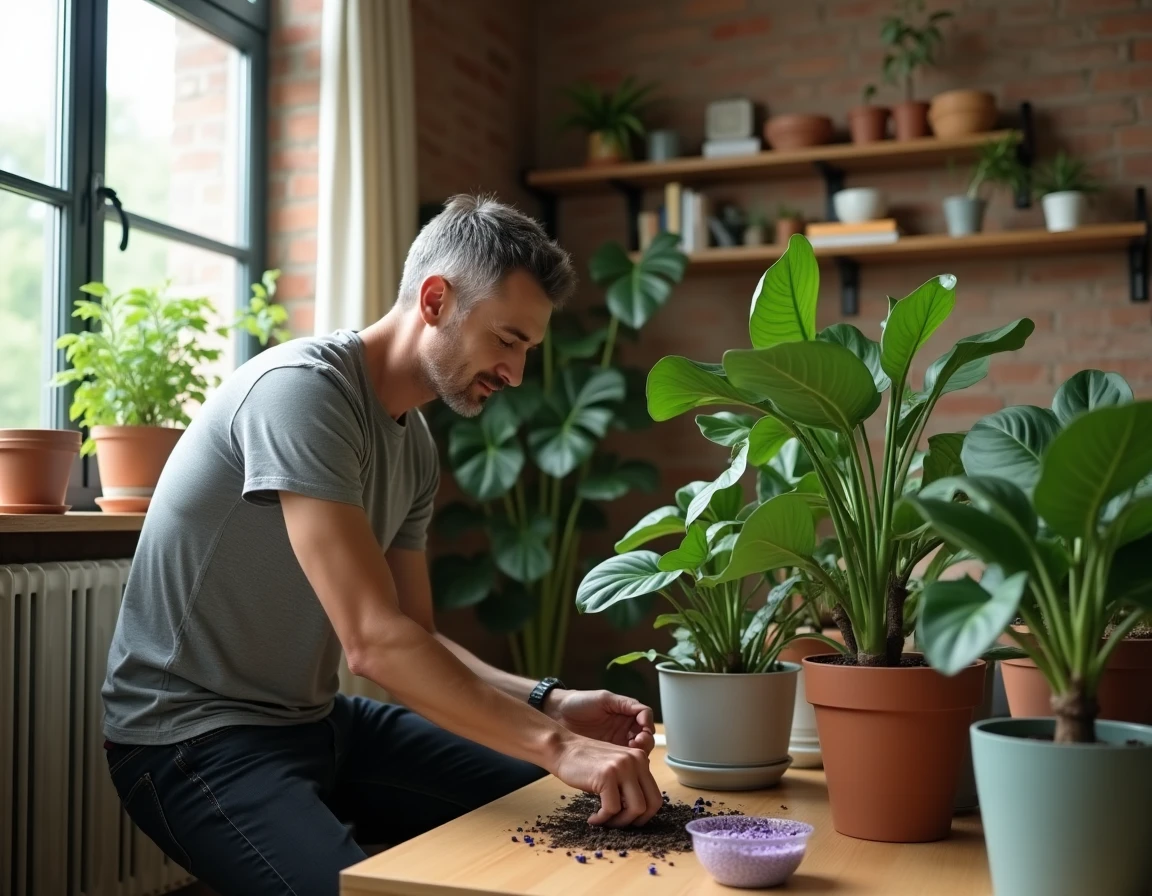
The communities of amateur gardeners in French and English, particularly active between 2022 and 2024, converge on one point: water beads are useful as a complement, not as a sole solution. Three common use cases frequently arise.
- Stabilizing moisture around the roots of water-hungry plants (Calathea, Fittonia, certain ferns) by mixing a handful of hydrogel into the potting soil during repotting.
- Preparing for a vacation by adding hydrated beads to the top layer of the pot to slow evaporation, in conjunction with a decorative pot or a water tray.
- Serving as a buffer reservoir for cuttings in the rooting process, where excess water can cause rot, but complete drying halts growth.
Conversely, for plants that do not tolerate constant moisture well (succulents, cacti, most fleshy plants), water beads are counterproductive. They maintain a humidity level that is too high at the roots, promoting root rot.
Substrate and drainage remain fundamental
Water beads do not replace good drainage at the bottom of the pot, nor do they replace a suitable substrate. Soil that is too compact will prevent the hydrogel from swelling properly. A pot without a drainage hole will turn the mixture into a swamp, beads or not.
An effective hydrogel in a poor substrate exacerbates problems rather than solving them. Perlite, clay beads at the bottom of the pot, and well-aerated potting soil remain the foundations of effective watering. The hydrogel serves as an additional layer of regulation, not as a replacement.
Safety and restrictions: an evolving regulatory context
Decorative water beads are subject to increasing restrictions in several countries. The main risk concerns ingestion by young children: these beads, often small and colorful, can be mistaken for candy. Since 2022, national health agencies and pediatric hospitals have raised alarms about cases of intestinal obstruction related to the ingestion of these polymers.
These restrictions indirectly affect the repurposing of beads for indoor plants. Some retailers have removed them from their toy and decoration aisles or added stronger warnings on the packaging.
Choosing a hydrogel labeled for horticulture
For use in pots or planters, opting for a hydrogel sold specifically for gardening avoids two problems: the risk of chemical leaching into the substrate and questions related to toy or decoration standards. Horticultural packaging generally specifies the granule size suitable for the type of cultivation and the estimated lifespan in the soil.
Water beads and daily watering: what tangible gains over the weeks
The main benefit is measured in the frequency of watering. For water-hungry indoor plants placed in well-drained potting soil with a properly dosed horticultural hydrogel, the interval between waterings notably extends. Amateur gardeners report spacing that can range from one to two times longer depending on conditions (light, ambient temperature, pot size).
For plants that are less demanding in water or already established in a substrate with good retention, the gain is marginal. Adding water beads to a pot of Sansevieria or Zamioculcas makes no practical sense: these plants tolerate prolonged dry periods without damage.
The interest thus focuses on a specific profile: tropical indoor plants, in medium-sized pots, in a warm or well-exposed room. For this profile, the hydrogel reduces water stress between waterings and limits the sudden variations in humidity that cause browning leaf tips in Calathea or ferns.
The choice of the right product, compatibility with the substrate, and respect for the specific needs of each plant remain the three variables that determine whether water beads truly transform the watering routine or end up as an unnecessary gadget at the bottom of the pot.