The services supporting seniors encompass a set of coordinated offerings aimed at maintaining home care, security, and continuity of care. Since the “Aging Well” law of April 8, 2024, a new institutional level has restructured access to these systems: the Departmental Public Service for Autonomy (SPDA), responsible for centralizing information and guidance for the elderly, people with disabilities, and caregivers.
SAD help and mixed SAD: the reform redefining home care offerings
Since 2023, the former SAAD, SSIAD, and SPASAD have been gradually grouped into two categories: SAD “help” and SAD “mixed”. This distinction is not merely administrative; it concretely changes what each structure can offer.
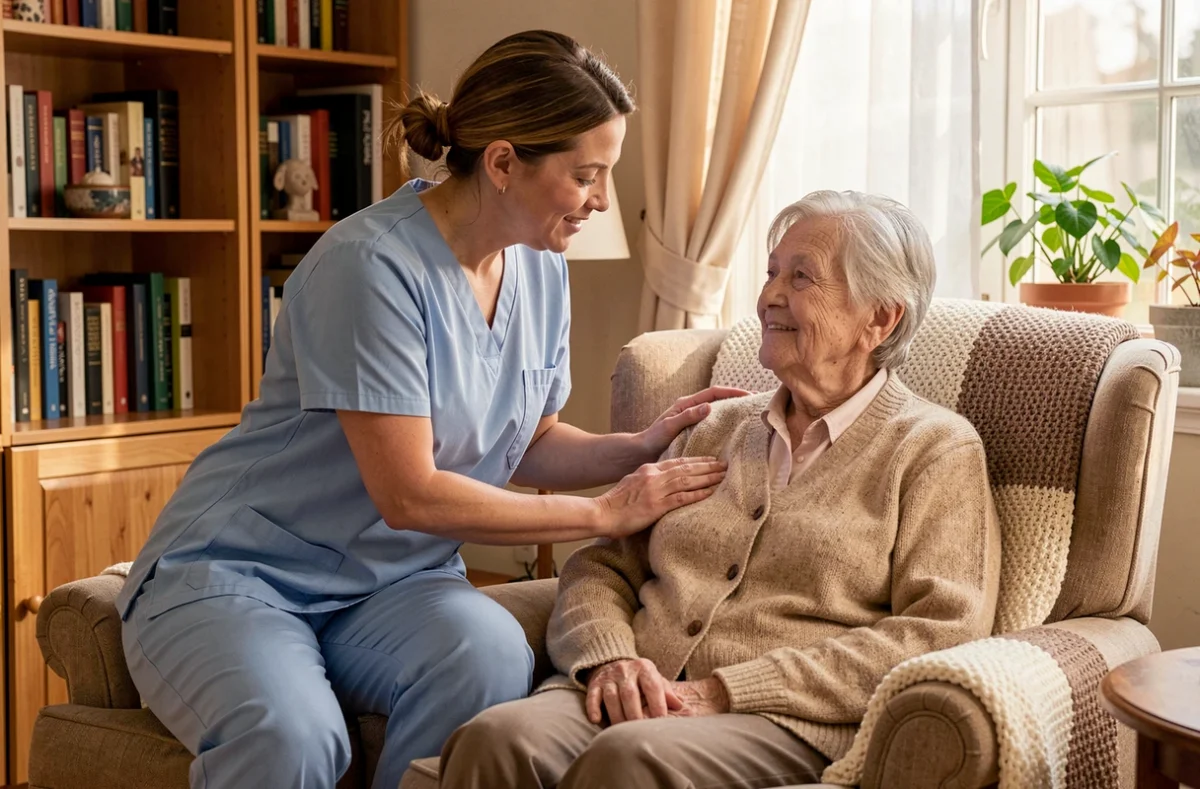
A SAD “help” covers daily services: meals, shopping, home maintenance, and assistance with personal hygiene. However, it does not directly provide nursing care. When a medical need arises, the structure must direct the person to a healthcare professional according to a formalized procedure.
The SAD “mixed” goes further by coordinating daily assistance and nursing care within the same service. For families, this means a single point of contact instead of two or three separate structures. This consolidation reduces disruptions in care, especially when a loved one’s health status changes rapidly after hospitalization.
Before choosing a structure, it is useful to consult the services offered by Guide Seniors to identify the available SADs based on the department and the type of services sought.
Coordination of home assistance and care: what the SAD help does not cover
The confusion between assistance and care generates mismatched expectations. A SAD “help” can send a caregiver to assist a person with their personal hygiene, but this worker is not authorized to perform a dressing, an injection, or monitor medical vitals.
When a senior requires both daily assistance and regular nursing care, two scenarios exist:
- The SAD “mixed” takes care of everything, with home helpers and nurses coordinated under the same management
- The SAD “help” intervenes for daily tasks, while a private nursing office or an active SSIAD provides the care, which multiplies the points of contact
- In some rural areas, the absence of a mixed SAD forces the combination of several providers, risking scheduling discrepancies
Effective coordination depends on the type of structure chosen, not just on the assistance plan granted. Checking the exact status of the service (help or mixed) before signing a contract avoids disappointments weeks after the start of interventions.
SPDA: the departmental orientation desk for seniors and caregivers
The Departmental Public Service for Autonomy, established by the law of April 8, 2024, addresses a recurring problem: the difficulty in identifying the right contact among the numerous existing systems. The SPDA centralizes access to information and guidance for elderly individuals losing autonomy, people with disabilities, and family caregivers.
Specifically, the SPDA does not replace home services or facilities. It functions as a coordination level that assesses a person’s overall situation and directs them to appropriate responses: home assistance, housing adaptations, teleassistance, temporary accommodation, or housing.
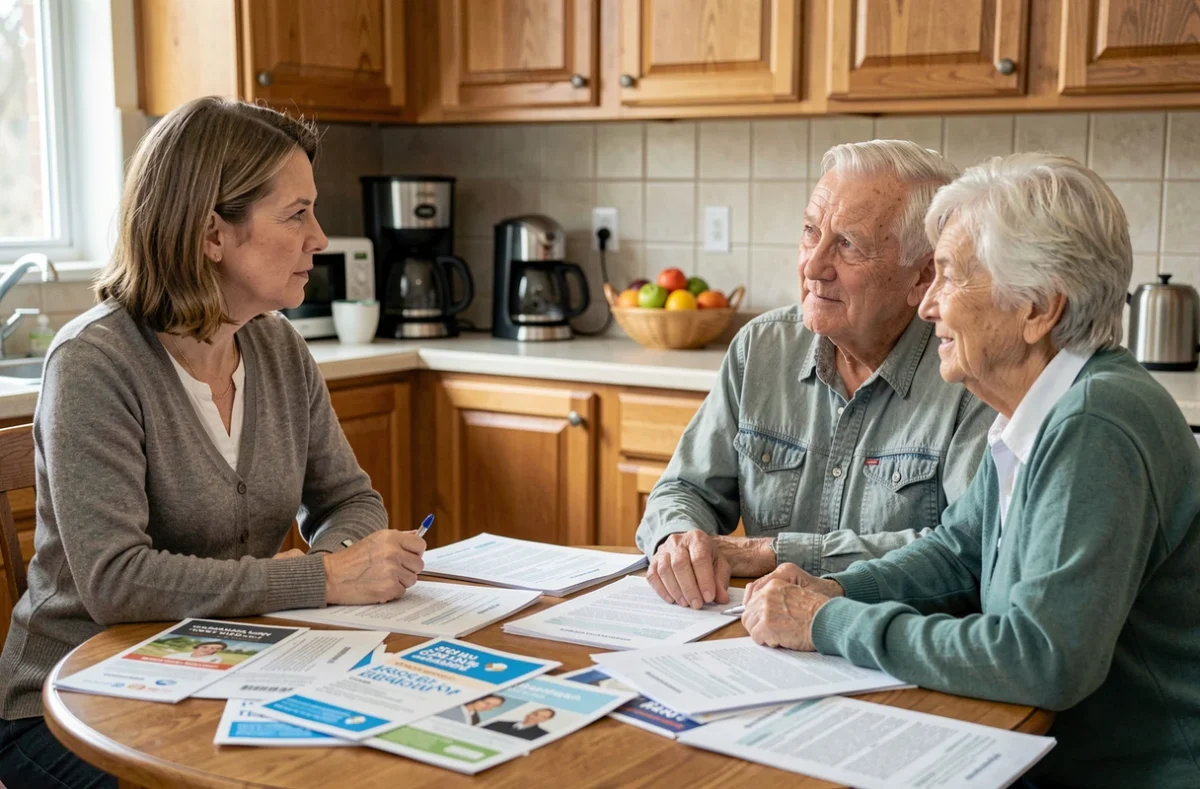
For caregivers, this single desk represents a considerable time saver. Instead of contacting the department, the pension fund, the CLIC, and the CCAS separately, a single point of entry allows for the initiation of needs assessment.
Recruitment and actual access to home assistance services
An assistance plan granted does not guarantee that the hours will actually be fulfilled. The home assistance sector faces a structural recruitment deficit. The DREES estimates that several hundred thousand additional jobs will be necessary by 2050 to support the aging population.
This pressure on staff has direct consequences:
- Waiting times of several weeks between the approval of the APA and the actual start of interventions
- Time slots dictated by the availability of caregivers, not by the preferences of the senior
- A high turnover that complicates the trust relationship between the caregiver and the person receiving assistance
In rural or underserved areas, access to autonomy services remains unequal across territories. The proximity of a well-staffed mixed SAD radically changes the quality of support compared to an area where only isolated providers operate.
The choice of a support service for a senior relies less on the list of displayed services than on the actual status of the structure and its ability to mobilize qualified personnel. Checking whether the local SAD is “help” or “mixed,” consulting the SPDA of one’s department, and anticipating implementation delays remain the three most useful reflexes before any steps are taken.