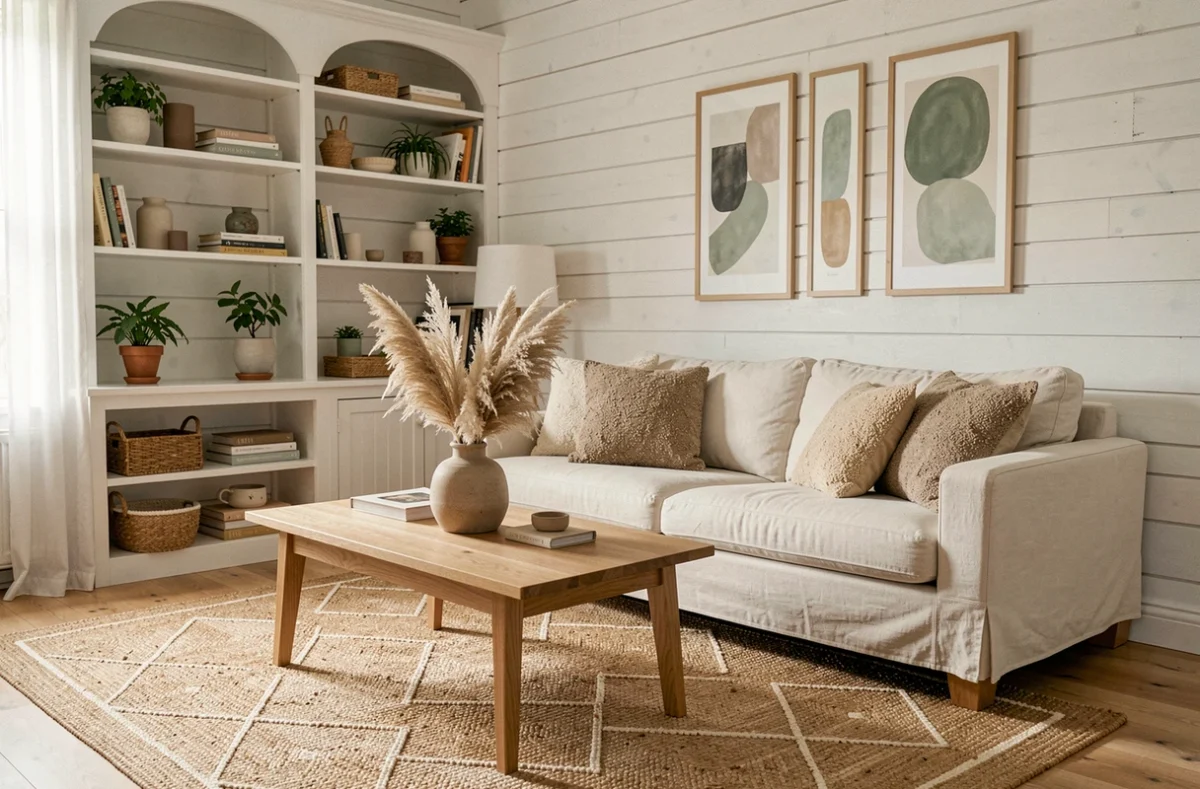
Interior decoration refers to all the choices that define the atmosphere of a living space: colors, furniture, textiles, lighting, spatial arrangement. Each decision alters the perception of a room, its comfort, and its functionality. Understanding the basic mechanisms helps avoid costly mistakes and create a coherent interior that suits one’s actual habits.
Energy renovation and interior decoration: why think of them together
Many decorating projects start after the completion of construction work. However, interior insulation or a false ceiling reduces the usable dimensions of the room, sometimes by several centimeters on each wall. The available height changes, and the planned locations for storage or lighting no longer match.
The layout must be included in the renovation plans, not added afterward. A piece of furniture ordered before the installation of insulating cladding may end up being too wide for the remaining space. A chandelier intended for a standard height may seem overwhelming under a lowered false ceiling.
Specifically, this means providing the project manager or craftsman with the dimensions of the intended furniture and validating the electrical layout (outlets, switches, cable outlets for suspensions) based on the final layout plan, not the initial plan. To learn more about Maison Art Déco, style and layout choices benefit from being anticipated from the design phase of the work.

The principles of colors and proportions in a room
Color is not just for decorating a wall. It alters the perception of volumes. A ceiling painted in a darker shade than the walls gives the impression of lowering the room. A light floor combined with dark walls visually expands the floor space while narrowing the walls.
The rule of three tones
A readable interior relies on a limited palette. The most common principle is to choose three main tones: a dominant shade (walls, floor), a secondary shade (furniture, curtains), and an accent shade (cushions, objects, frames). This ratio avoids visual saturation without falling into monotony.
The dominant shade occupies the largest area. The secondary shade provides contrast without being overwhelming. The accent shade, used sparingly, draws the eye to specific points.
Proportions of furniture relative to space
A three-seater sofa in a small living room creates a filling effect that obstructs circulation. Conversely, furniture that is too small in a large room gives an impression of unfinished emptiness. The proportion of the furniture to the room takes precedence over style.
Before any purchase, measuring the available space and simulating the floor area (with tape, for example) helps ensure that the passage remains fluid and that each area retains its function.
Upholstery textiles: what labels don’t always say
Curtains, cushion covers, sofa fabrics: textiles are a significant part of the decorative identity of an interior. Their choice goes beyond just color or pattern.
European regulations are increasingly focusing on PFAS (per- and polyfluoroalkyl substances), used in certain stain-resistant treatments applied to upholstery fabrics. These compounds provide resistance to liquids and stains, but their environmental and health impact is subject to increasing restrictions.
For a decoration project, this means that a label stating “easy care” on a textile is not enough to guarantee the absence of chemical treatment. Examining the manufacturer’s technical data sheets and prioritizing certified textiles (Oeko-Tex, for example) provides better visibility on the actual composition of the fabric.
- Check if the fabric has undergone a PFAS-based stain treatment by consulting the detailed product sheet
- Prefer certifications that test for the presence of harmful substances rather than just commercial mentions
- For high-use items (sofa, dining chairs), choose removable and washable fabrics rather than surface chemical treatments
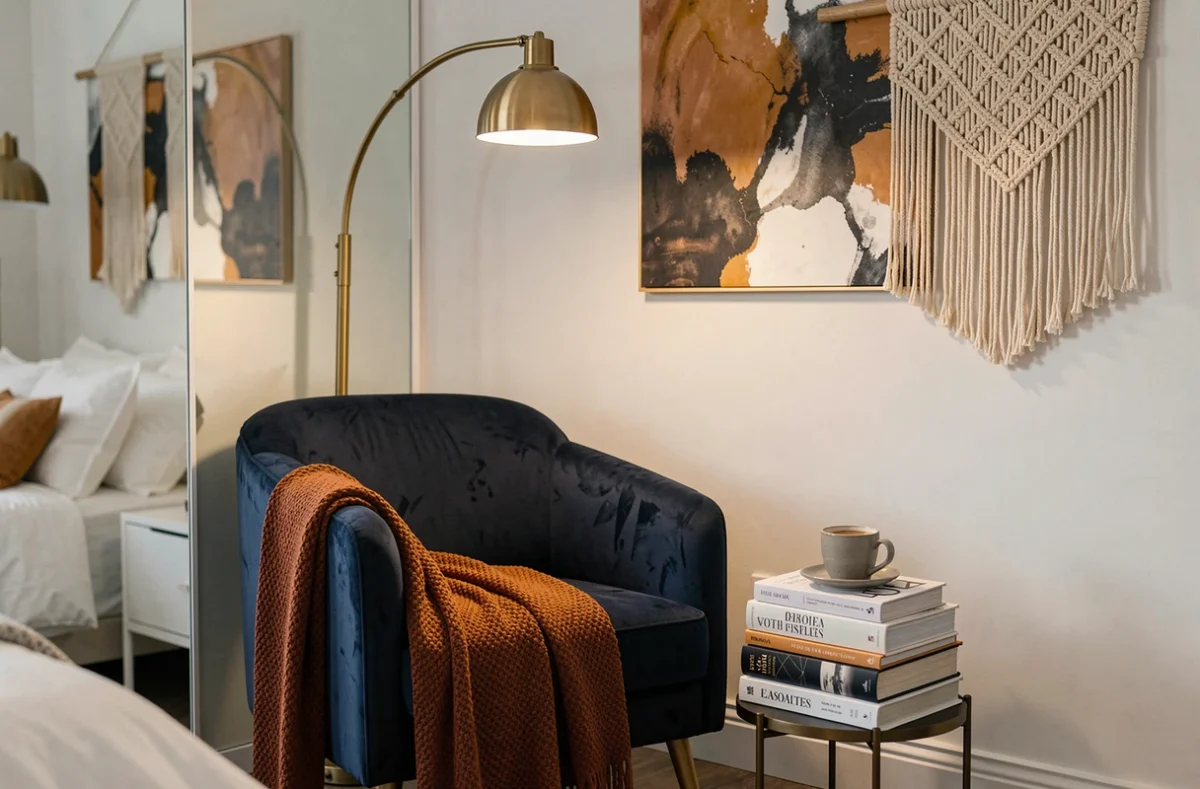
Decoration and furniture reuse: organized channels
Finding an antique piece of furniture at a flea market remains a common practice. A lesser-known alternative involves local furniture reuse networks, structured around the extended producer responsibility (EPR) framework.
In Occitanie, organizations affiliated with Ecomaison have organized operations for collecting, sorting, repairing, and refurbishing furniture. These pieces are then offered for donation or resale. The benefit for a decor project is twofold: access to furniture at a reduced cost and the availability of pieces with dimensions or finishes that are no longer found in new commercial products.
Adapting the project to available pieces
Reuse changes the usual logic of a decoration project. Instead of defining a layout plan and then searching for corresponding furniture, it can be more effective to identify available pieces before finalizing the arrangement. The quantities and dimensions vary with arrivals, requiring flexibility in planning.
This approach is particularly suitable for secondary rooms (guest room, office, entryway) where dimensional constraints are less strict than in a kitchen or bathroom.
- Consult local recycling centers and reuse organizations before finalizing a layout plan
- Check the structural condition of the furniture (joints, legs, drawers) rather than just the aesthetic aspect
- Budget for refurbishment (sanding, painting, hardware) to integrate the furniture into the chosen style
- Accept that the final result may differ from the initial plan, often resulting in a more unique interior
Interior decoration is not just about assembling objects that are individually pleasing. Each choice interacts with the dimensions of the room, the available light, the chemical composition of the materials, and even the construction schedule. A successful interior relies as much on method as on taste.