Your relative is struggling to prepare meals, maintain their home, or simply move around the house. You are looking for a solution to ensure they can stay at home safely. Home care for the elderly encompasses a range of services and professionals whose names vary, making the offerings difficult to understand. This article clarifies the terminology, details the specific tasks, and highlights the real benefits of staying at home.
Home Helper, Housekeeper, SAD: Understanding the Terminology
The sector uses several terms to refer to closely related but distinct realities. For example: your neighbor talks about a “home helper,” your doctor mentions a “home autonomy service,” and the town hall refers to a “housekeeper.” They all refer to home care for the elderly, but each term covers a specific scope.
The social life assistant (AVS) is a trained professional who intervenes in what are called “important” tasks: bathing, dressing, assistance with transfers (bed, chair). This level of support requires a state diploma (the DEAES, state diploma for educational and social support).
The housekeeper, on the other hand, focuses on maintaining the home, shopping, and meal preparation. Their intervention does not cover personal hygiene care. They are suitable for individuals who are still independent but need a helping hand with daily tasks.
Since the decree of July 13, 2023, a new category structures the offerings: home autonomy services (SAD). The SAD “assistance” provides support for daily living. The SAD “mixed” also coordinate nursing care, bringing assistance and care under a single point of contact. This reform simplifies the process for families, as a single service can organize all interventions.
Concrete Tasks of Home Care for the Elderly
Behind the generic term “home care” lies a wide range of tasks. Everything depends on the level of autonomy of the person being assisted and the established care plan.
Support in Daily Activities
The priority is to secure the actions that the person can no longer perform alone. This can start with assistance in getting up in the morning and extend until bedtime.
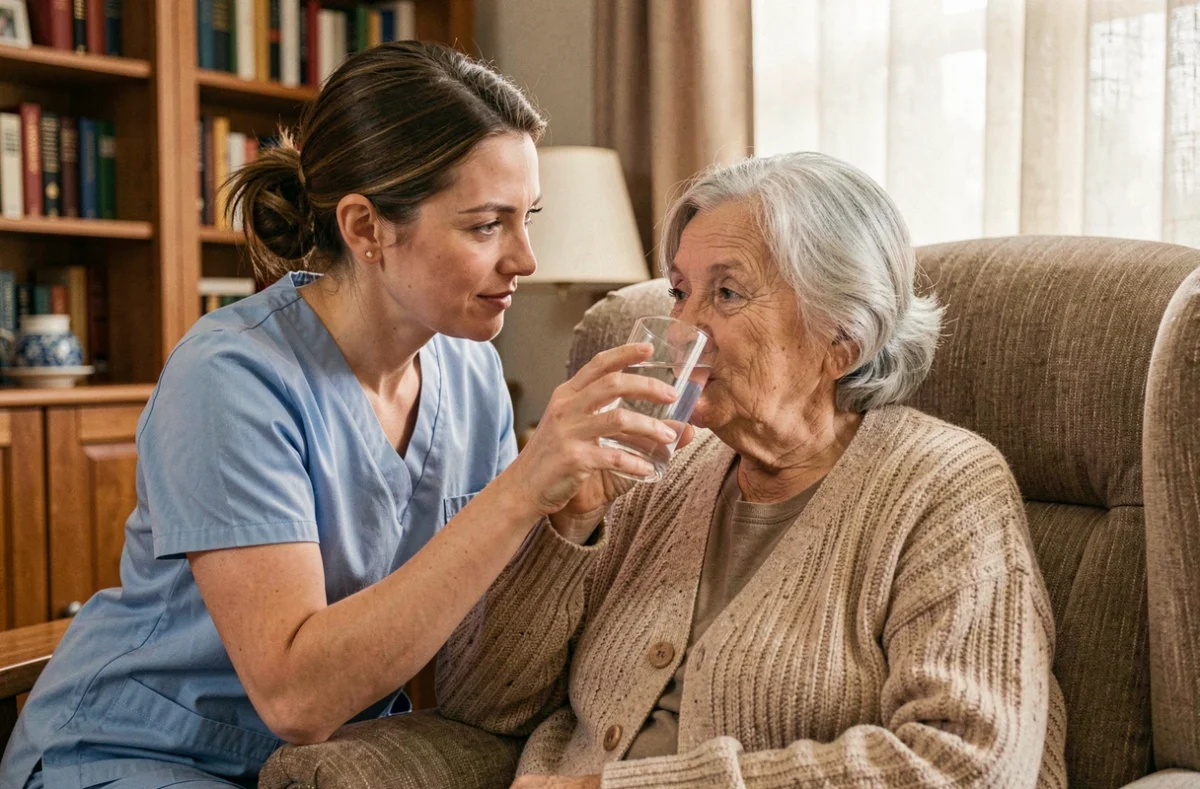
- Assistance with bathing and personal hygiene (shower, dental care, dressing), provided by a qualified home helper
- Preparation of meals tailored to prescribed diets, or meal delivery when cooking is no longer possible
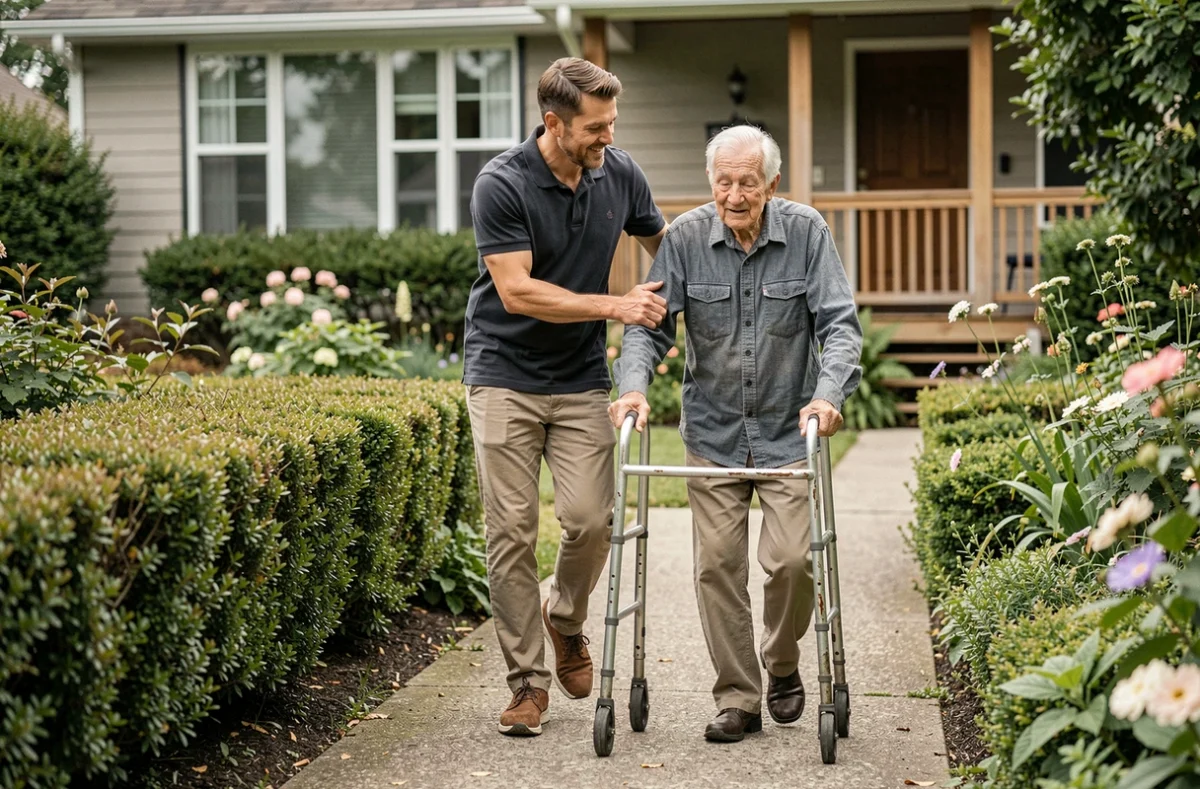
- Support during movements inside the home and outside (shopping, medical appointments, walks)
- Regular maintenance of the home: cleaning, laundry, ironing, managing linens
Social Support and Daily Monitoring
Isolation affects a significant portion of elderly individuals living alone. The home caregiver plays a role of regular social connection. A conversation while preparing a meal, a game of cards in the afternoon, or accompanying them to the market changes the rhythm of the week.
The home caregiver also provides discreet monitoring. They spot warning signs: loss of appetite, recent falls, unusual confusion. This observation reported to the primary care physician or coordinating service allows for action before the situation deteriorates.
APA and Tax Credit: Financing Home Care
Cost remains the primary concern for families. Several programs exist to ease the financial burden, but their access conditions vary.
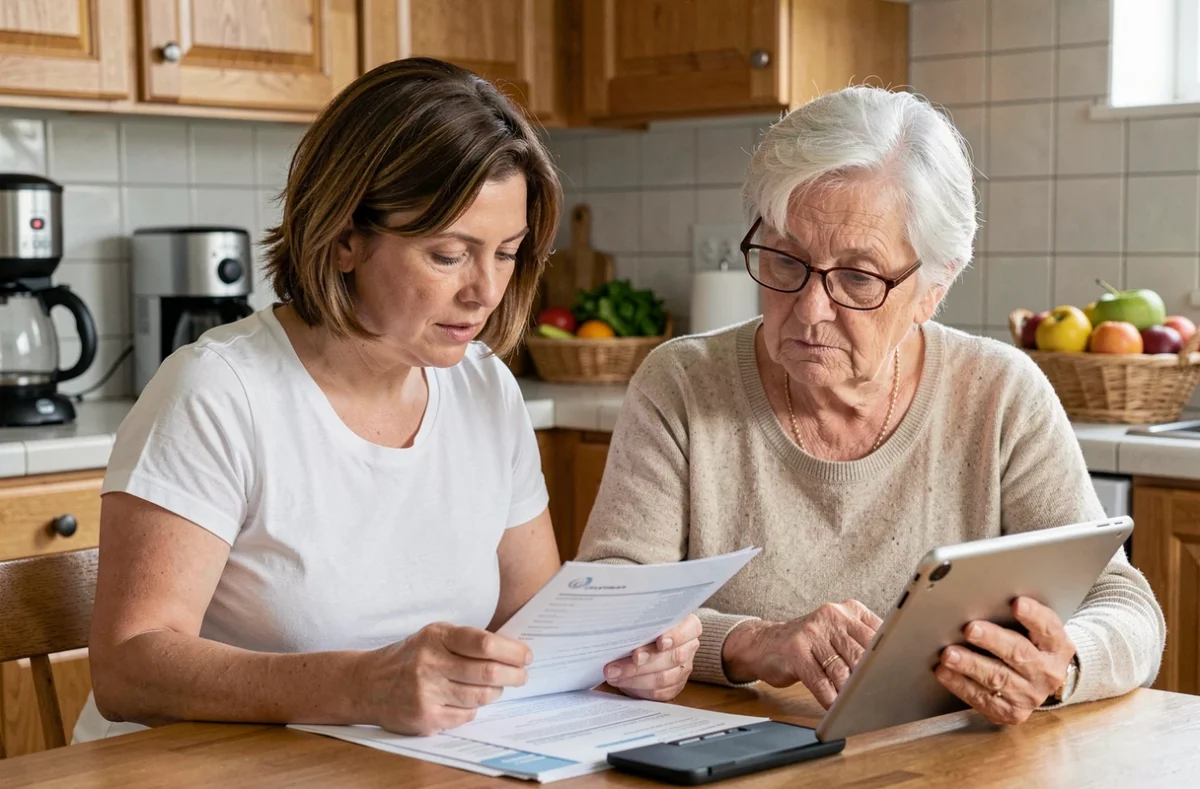
The personalized autonomy allowance (APA) is paid by the department to individuals aged 60 and over who are losing autonomy. Its amount depends on the degree of dependency assessed according to the AGGIR grid (from GIR 1, the most dependent, to GIR 4). Individuals classified as GIR 5 and 6, considered autonomous, are not entitled to it but can request assistance from their pension fund.
The tax credit for employing a home worker covers half of the expenses incurred, within a limit set by tax legislation. An immediate advance on the tax credit allows for reducing the out-of-pocket cost right from the first deduction, without waiting for the income tax return. This immediate advance does not apply to all beneficiaries: depending on the situation, some individuals remain in the classic reimbursement scheme.
Those still autonomous can also benefit from the department’s housekeeper assistance, subject to income conditions. This program is distinct from the APA and targets regular household tasks.
Concrete Advantages of Staying at Home Compared to Institutional Care
Staying at home is not just a matter of emotional comfort. Home care presents measurable benefits on several levels.
The familiar environment reduces disorientation, especially in individuals suffering from cognitive disorders. A known environment (furniture, visual cues, neighborhood) limits anxiety related to changing living situations. This is often an underestimated factor in the decision-making process.
Financially, home care for a few hours a day is generally less expensive than institutional care, especially when the need does not exceed a few hours daily. The calculation changes if the person requires continuous presence, but for moderate loss of autonomy, staying at home remains the most economical solution.
Staying at home also preserves residual autonomy. The person continues to do what they can (set the table, water their plants, choose their menu). The caregiver complements without substituting. This logic of partial assistance slows down the loss of autonomy instead of accelerating it.
Recruitment Difficulties and Territorial Disparities: A Point to Check
A care plan granted by the department does not guarantee that interventions will start immediately. The personal services sector faces persistent recruitment tensions.
Rural areas are particularly affected. Available time slots may be limited, and setup times extended. Before organizing a return home after hospitalization, check with the local home autonomy service about actual timelines and the availability of caregivers.
The Departmental Public Service for Autonomy (SPDA), created by the law of April 8, 2024, aims to make orientation clearer. Its role is to inform and direct towards suitable solutions, not to provide the services itself. It is an entry point, not a service provider. Contacting the SPDA or the local information and coordination center (CLIC) remains the first reflex to identify available services in your geographical area.