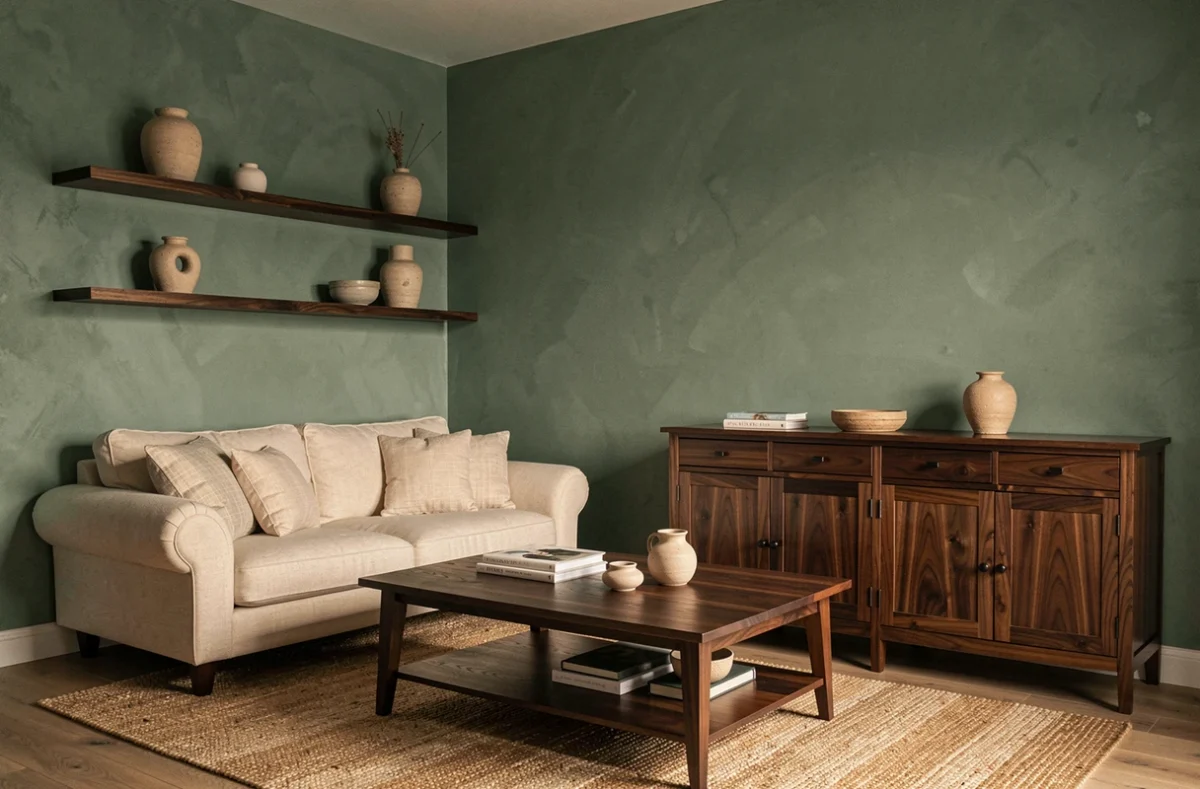
A walnut sideboard, a wenge table or a mahogany bookcase: these pieces make a statement in any room. The wall color around them can either overwhelm them or bring out their full depth. Choosing the right shade means understanding how light, undertones and contrast work together with dark wood.
Dark wood undertones: the detail that changes everything
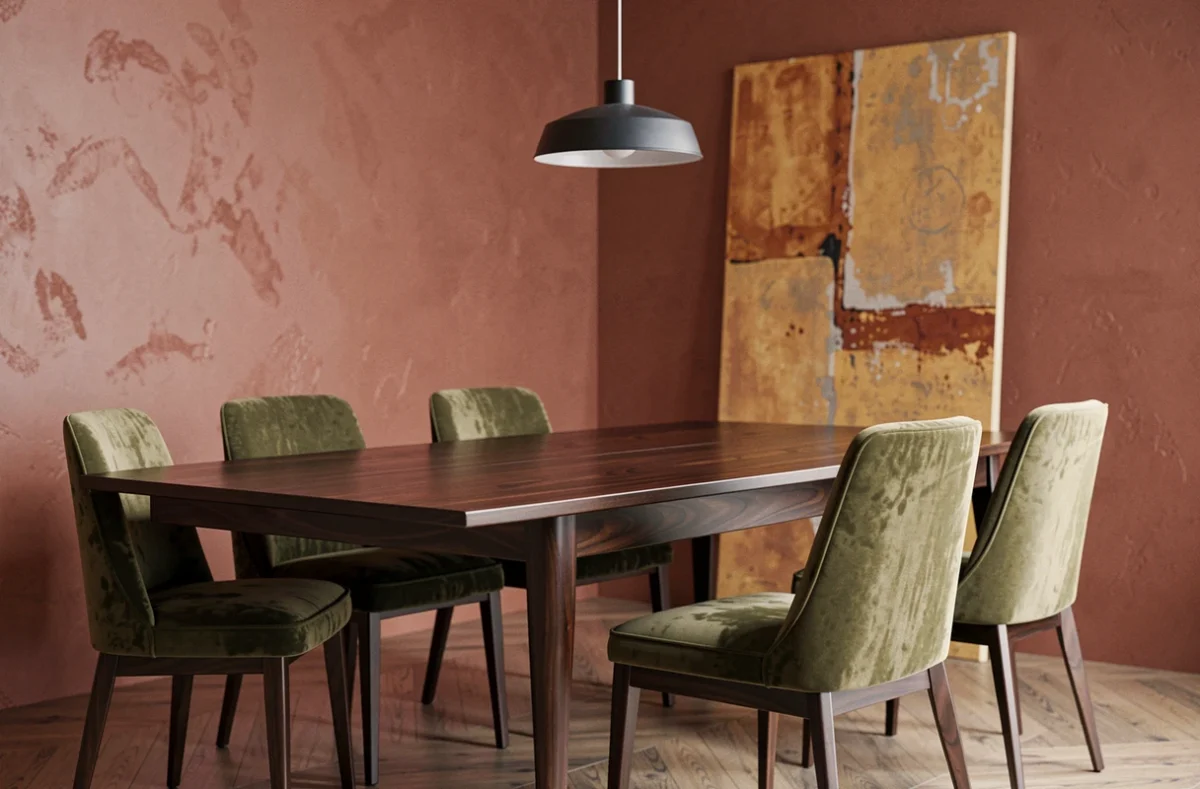
Before choosing a paint color, take a close look at your furniture in daylight. Dark wood is never uniformly brown. Walnut often has reddish or orange undertones. Wenge tends toward purplish gray. Mahogany has distinctly red highlights.
Why does this detail matter so much? Because the wood’s undertone guides your choice of wall undertone. If your furniture has warm highlights (red or orange), a wall with cool undertones (pure blue or blue-gray) may create an unpleasant visual clash. By contrast, a slightly warm wall will enhance the wood’s warmth without competing with it.
To identify the undertones, hold a piece of pure white fabric against the furniture. Any color reflected onto the fabric will reveal the wood’s hidden undertone. It’s a simple test that can help you avoid costly painting mistakes.
If you’re unsure about the wall color to pair with dark wood furniture, taking the time to assess the wood is well worth it.
Wall colors that bring out dark wood, whatever the mood you’re after
The choice comes down to one practical question: what kind of atmosphere do you want in the room? Three broad approaches work well, each with its own variations.
Off-white and cream to make the space feel larger
An off-white or cream wall creates a crisp contrast with dark furniture. The dark wood becomes the room’s focal point, without making the overall look feel busy. Pure white works too, but be careful: in certain lighting, the strong contrast can make the wood look duller. Choose a subtly tinted white (ivory, linen or eggshell) to soften the transition.
Sage and olive green for a natural feel
Mid-tone greens—not too bright or too dark—pair naturally with dark wood. Sage green, in particular, brings out the wood grain without competing with it. Olive green works better in rooms with little natural light, as it remains easy to see even in dim conditions.
Deep blue for a room with character
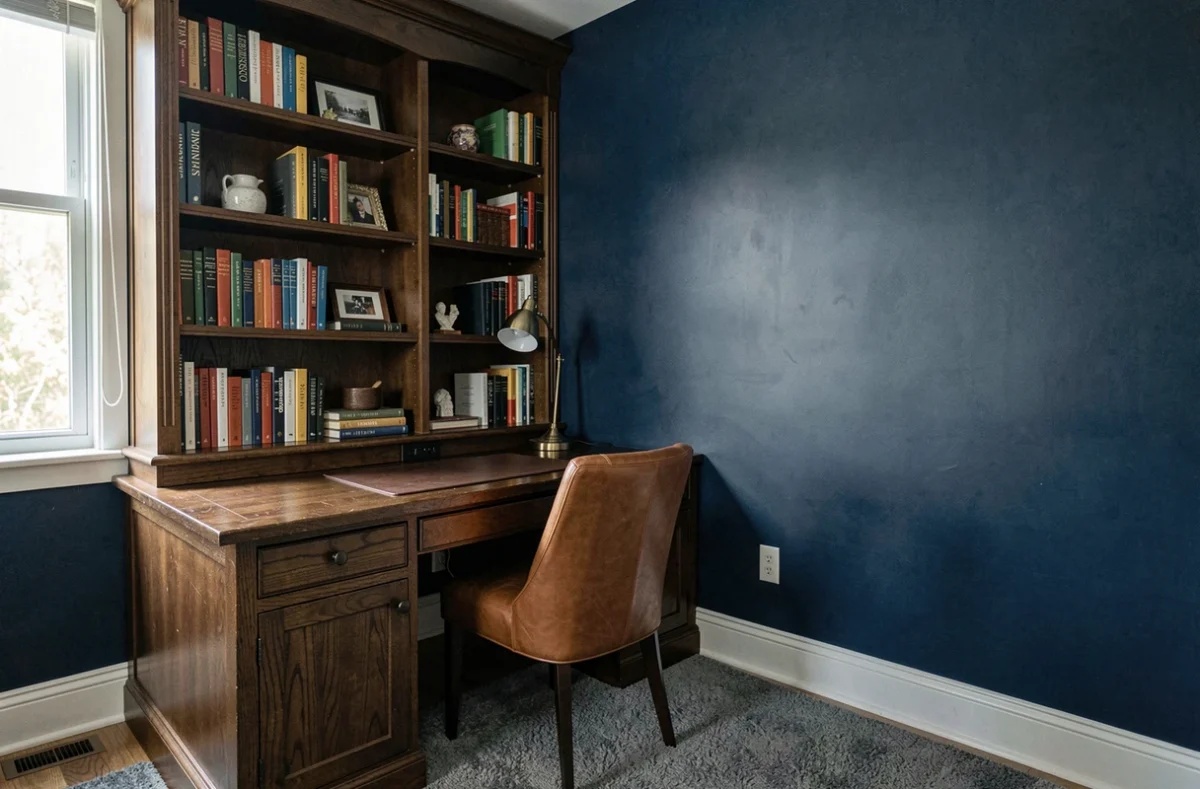
Pairing dark wood with midnight blue or teal creates a rich, enveloping look. This combination works especially well in a living room or bedroom, but less so in a narrow hallway, where it may make the space feel cramped. Save deep shades for walls that get some light, even indirect light, to avoid a cave-like effect.
Beige and taupe for warm, understated style
Beige and taupe are reliable choices. They don’t overpower the furniture and suit most styles. Taupe, a blend of gray and brown, echoes the wood’s tones without matching them exactly. The result is a soft, cohesive look without feeling monotonous.
Test paint in the right lighting
Have you ever noticed that a color you picked in the store looks different once it’s on your walls? You’re not imagining it. Artificial lighting significantly changes how undertones appear.
A warm beige can turn yellow under a warm LED bulb. A pearl gray can look blue under cool lighting. And in a room with both a warm pendant light and a cool-toned table lamp, the same wall can look different depending on where you’re standing.
The most reliable method is to paint a sample onto a piece of sturdy cardboard, then move it around the room:
- Next to the dark wood furniture, to check how the two surfaces look together
- By the window, in both morning and afternoon daylight, as the direction of the light changes how warm or cool a color appears
- In the darkest corner, with the lights on, to see how it will look in the evening
This test takes a day, but it’s far better than painting an entire wall the wrong color.
Common mistakes to avoid with dark wood furniture
Some color combinations are common in home interiors, but rarely deliver the desired effect.
- Mid-gray with no clear undertone: it can look flat, neither warm nor cool, and fails to complement the wood. If you prefer gray, choose a warm gray (with brown or pink undertones) or a true gray with a blue cast
- An all-dark look (dark walls + dark furniture + dark flooring): without a light contrast, the room absorbs light and the furniture blends into the background instead of standing out
- Bright yellow over a large area: it competes with the wood’s warm highlights and can look overpowering and tiring on the eyes
One accent wall is all you need to try a bold color. Keep the other walls neutral to give the room some breathing space. This approach limits the risk and makes it easy to change course if you’re not happy with the result.
Ultimately, choosing a wall color for dark wood furniture comes down to three practical factors: the wood’s actual undertone, the room’s lighting and the level of contrast you want. Testing a movable sample throughout the day is still the most reliable way to avoid unpleasant surprises once the paint is on the wall.