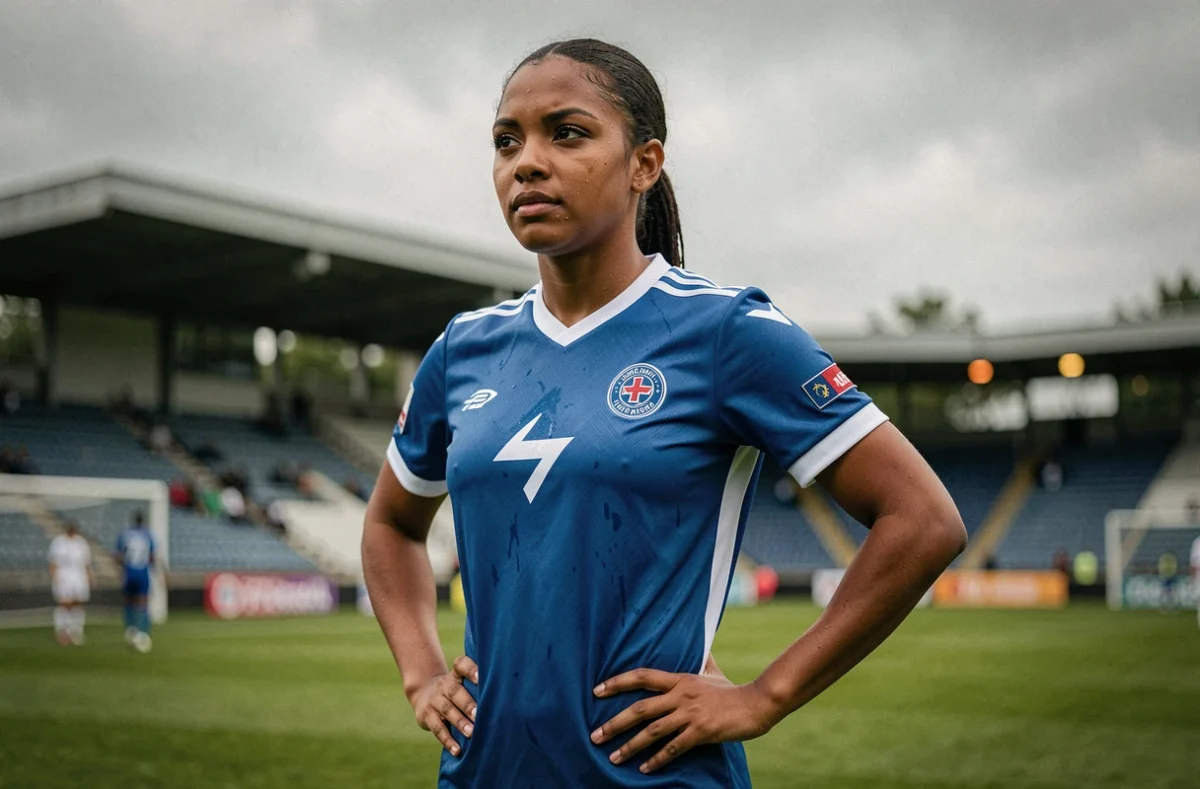
Born in Marseille in 1987, Louisa Necib made 145 appearances for the French national team, scoring 36 goals. An attacking midfielder who came through the Clairefontaine academy, she built her career with Olympique Lyonnais and the national team before hanging up her boots after the 2016 Rio Olympics. Assessing her career means looking at two different realities: an exceptional club record and no major title with Les Bleues.
Club and international honours: two distinct paths
| Category | Olympique Lyonnais | France national team |
|---|---|---|
| League titles | 4 French league titles | No continental or world titles |
| Domestic cups | 3 French Cups | – |
| European/world competitions | 2 Champions League titles | 4th at the 2011 World Cup, 4th at the 2012 Olympics |
| Individual honour | – | 4th in the 2014 FIFA Women’s Player of the Year vote |
The contrast is clear. With OL, Necib won everything on the domestic and European stage. With the national team, consecutive fourth-place finishes at the two biggest tournaments of her generation—the 2011 World Cup and the 2012 London Olympics—sum up a career spent close to the podium without ever reaching it.
This gap is significant. It highlights a player whose consistency at the highest level with her club was not matched by the same collective success with the national team. To learn more about Louisa Necib’s origins and her parents, we need to look back to her Algerian roots and childhood in Marseille, two influences that shaped her sporting identity.
Family roots and training in Marseille: the foundations of an unconventional player
Louisa Necib is of Algerian descent, a heritage she has never set aside. Growing up in Marseille in the 1990s meant living in a city where men’s football dominated the collective imagination. For a young girl, the path to the top level ran through structures that were still in their infancy in French women’s football.
After spells at Clairefontaine and Montpellier, she joined Lyon in 2007. That move marked the real turning point in her career. Olympique Lyonnais’s women’s team was then building its domestic and European dominance, and Necib joined the project at just the right time.
What Marseille brought to her game
The comparison with Zinédine Zidane, another Marseille native of Algerian descent, goes beyond their shared roots. The nickname “the female Zidane” refers to her style of play: her touch, vision and ability to direct attacking play. Given to her early on, the label followed her throughout her career.
The comparison has its limits. It helped introduce her to a wider audience, but it also framed perceptions of her game through a male reference point. Necib had qualities of her own, particularly her skill at set pieces and her ability to read space in the final third.
Beyond the nickname: the technical qualities that defined Necib
Reducing Louisa Necib to the nickname “the female Zidane” means overlooking what made her distinctive on the pitch. Three aspects of her game deserve particular attention:
- Vision and attacking build-up: her ability to launch attacks from midfield and pick out passes between the lines was a hallmark of her game for both OL and the national team.
- Set-piece effectiveness: her 36 goals in 145 appearances included a significant number of set-piece goals, a technical skill often underestimated in women’s football at the time.
- Positional versatility: a natural attacking midfielder, she adapted to several tactical setups over the course of her seasons in Lyon, adjusting to successive systems of play.
These attributes explain why she ranked among the world’s four best players in the 2014 FIFA vote. The nickname served as a media shorthand, but her identity as a player was built on measurable skills, not simply a stylistic resemblance.
Retirement at 29 and a new career as a football pundit
Louisa Necib retired from professional football after the 2016 Rio Olympics. She was 29, an age when many players are still pursuing their careers. This early decision sets her apart from several teammates of her generation.
From the pitch to the microphone
She moved into sports media as a pundit. This career change has allowed her to stay connected to French women’s football without returning to competition. It also reflects a shift in the media landscape: the presence of former players as pundits helps raise the profile of women’s sport in broadcast schedules.
Necib has also appeared on several cooking shows on French television, an unexpected direction that reflects her willingness to build a life beyond the strictly sporting world.
A legacy that goes beyond honours
Louisa Necib’s career reflects a pivotal period in French women’s football. She played during a time when the sport was moving from near-invisibility in the media to increasingly extensive coverage, culminating in the 2011 World Cup in Germany. Her career coincided with the development of French women’s football in ways that went far beyond her individual statistics.
The fact that her name remains associated with this transformation, rather than only with a nickname borrowed from men’s football, is probably the fairest measure of her contribution to French sport.